Mobi Legs: Rethinking the Crutch
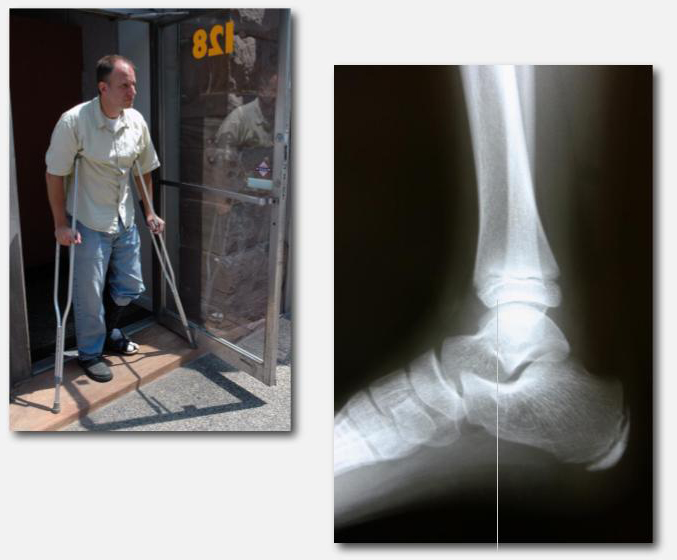
A foot injury put Jeff Weber on standard crutches. Within a day, their shortcomings were painfully clear—and an everyday mobility aid became an opportunity to design with more care for the person using it.
Origin
Traditional crutches made recovery harder than it needed to be: hard beneath the arms, punishing on the hands, and awkward to move with. Rather than asking people to endure those compromises, Studio Weber started again from the human experience of moving through recovery.
The Problem
The conventional crutch had barely changed in generations. Its basic geometry forced the person to adapt to the object. The design challenge became broader than cushioning contact points: could the entire crutch move more naturally with the body?
The Response
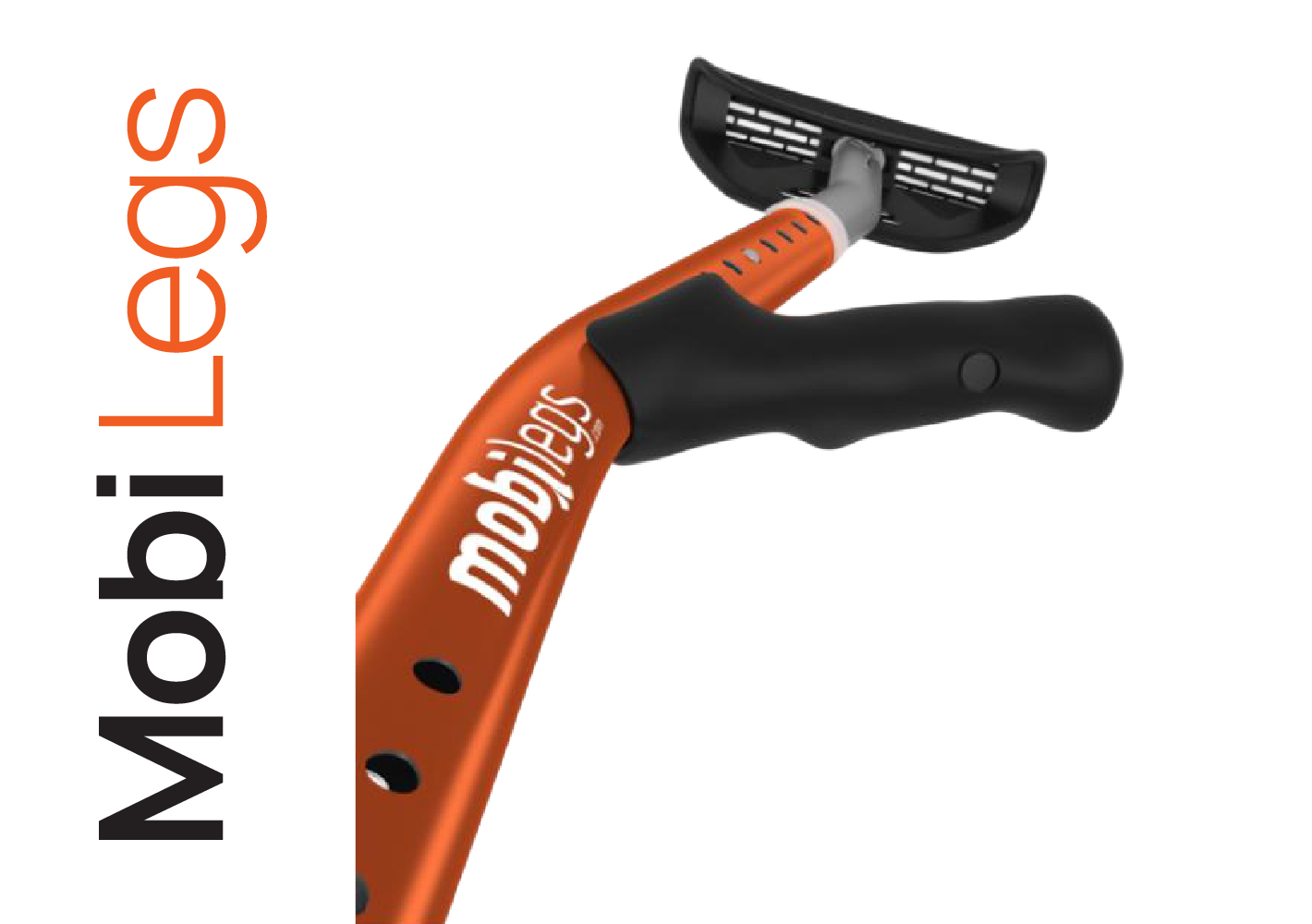
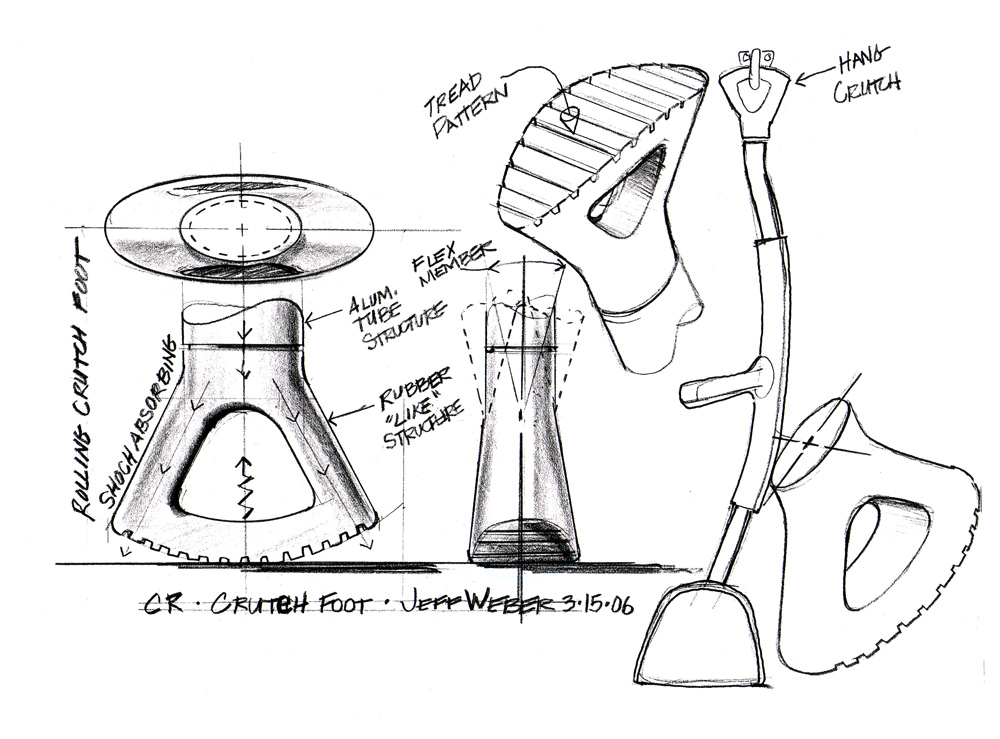
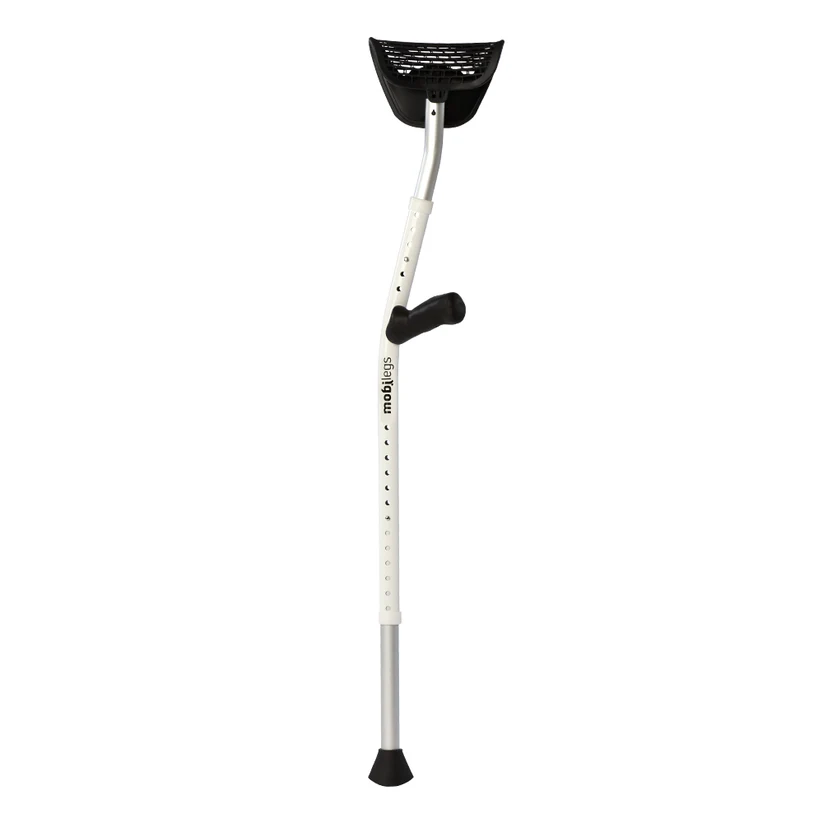
Mobi Legs rethought the main points of contact between person, crutch, and ground. A suspended saddle could move and flex with the body. Sculpted handgrips spread pressure more comfortably. The curved frame made room for the body in motion rather than trapping it inside a rigid triangle. At the ground, the rocker-foot geometry rolls progressively instead of striking abruptly, reducing impact and pressure through the gait cycle.
Build to Learn
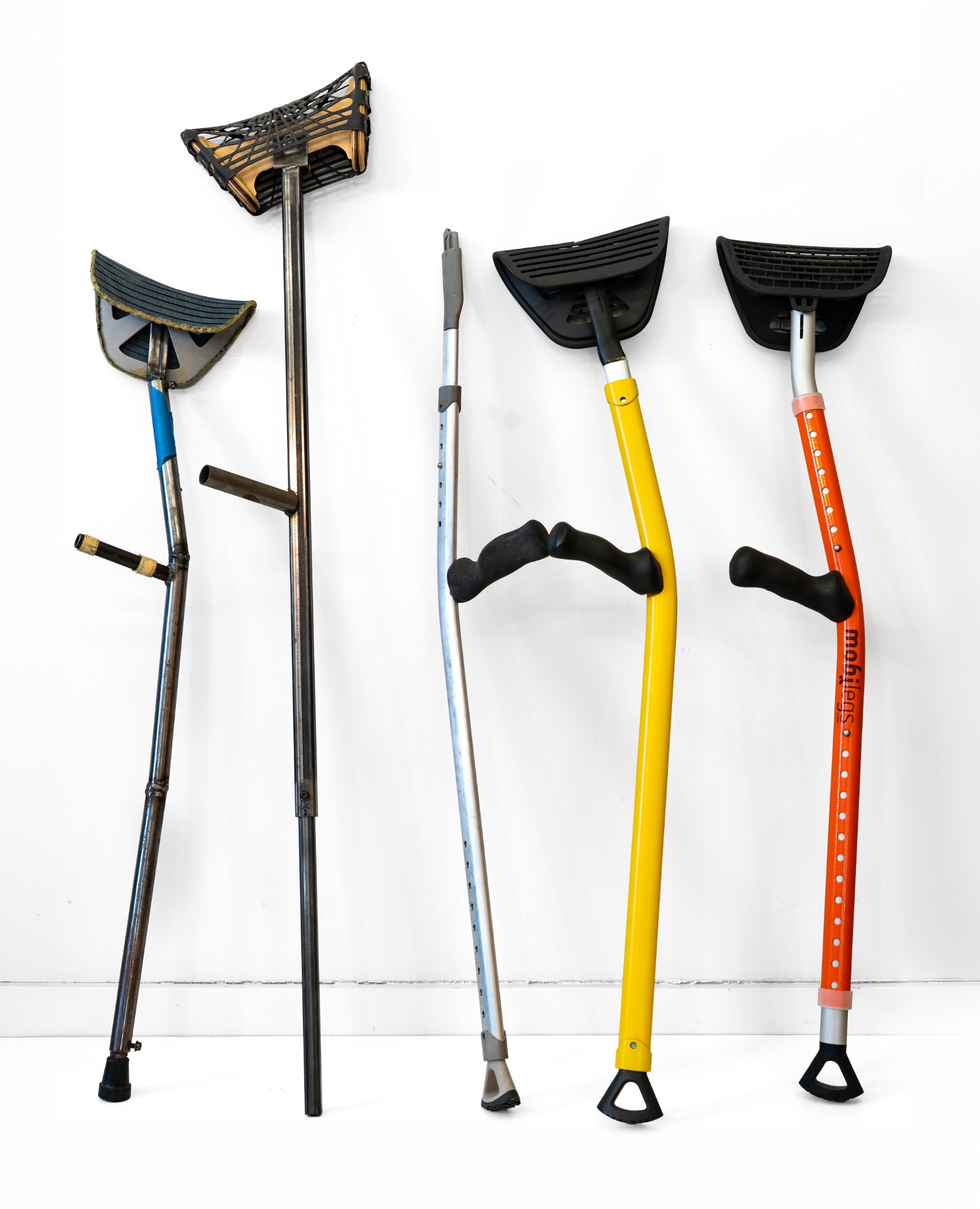
The idea developed through rapid physical experiments: rough mockups, material studies, saddle concepts, attachment studies, and repeated testing. Each prototype answered one question and exposed the next. The suspended saddle evolved from an early lightweight compliant concept into a stronger, more durable system with an optimized pattern and secure attachment.
From Prototype to Product
As the pieces came together, Mobi Legs became a coherent system rather than a collection of ergonomic add-ons: a shock-absorbing suspended saddle, a pivoting relationship at the upper support, a frame that wraps around the body, hand interfaces that distribute load, and a rolling foot that softens the transition through each step.
Outcome
What began as an attempt to make a better crutch became a demonstration of what can happen when an overlooked everyday object is reconsidered around the human experience. We set out to make a better crutch. We ended up building a new category.
further reading
What would you like to know about Studio Weber?