
embody / the design story
can a chair
be good for you?
A question about the human body became an exploration of movement, many small supports, and a back that could follow the person sitting in it.
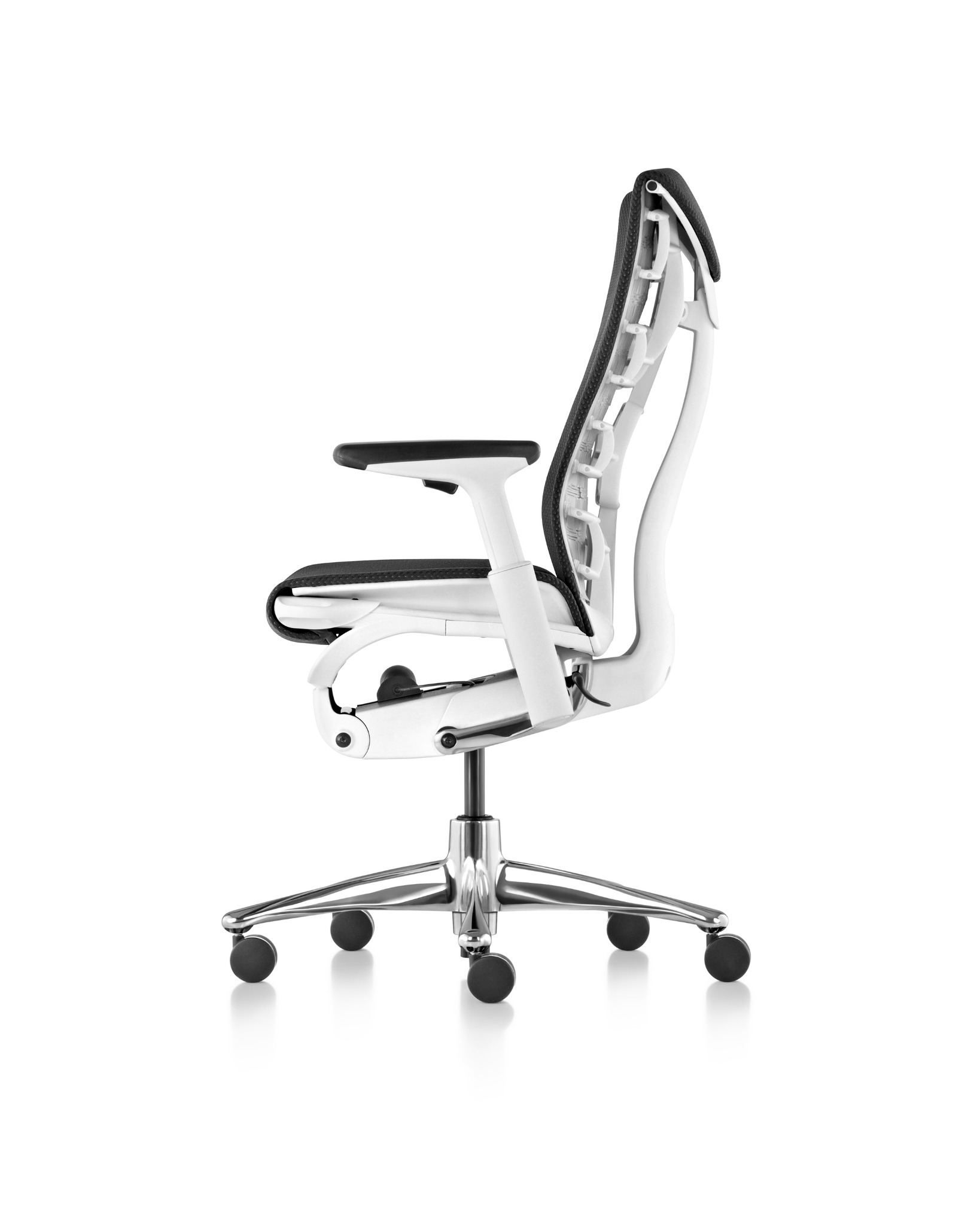
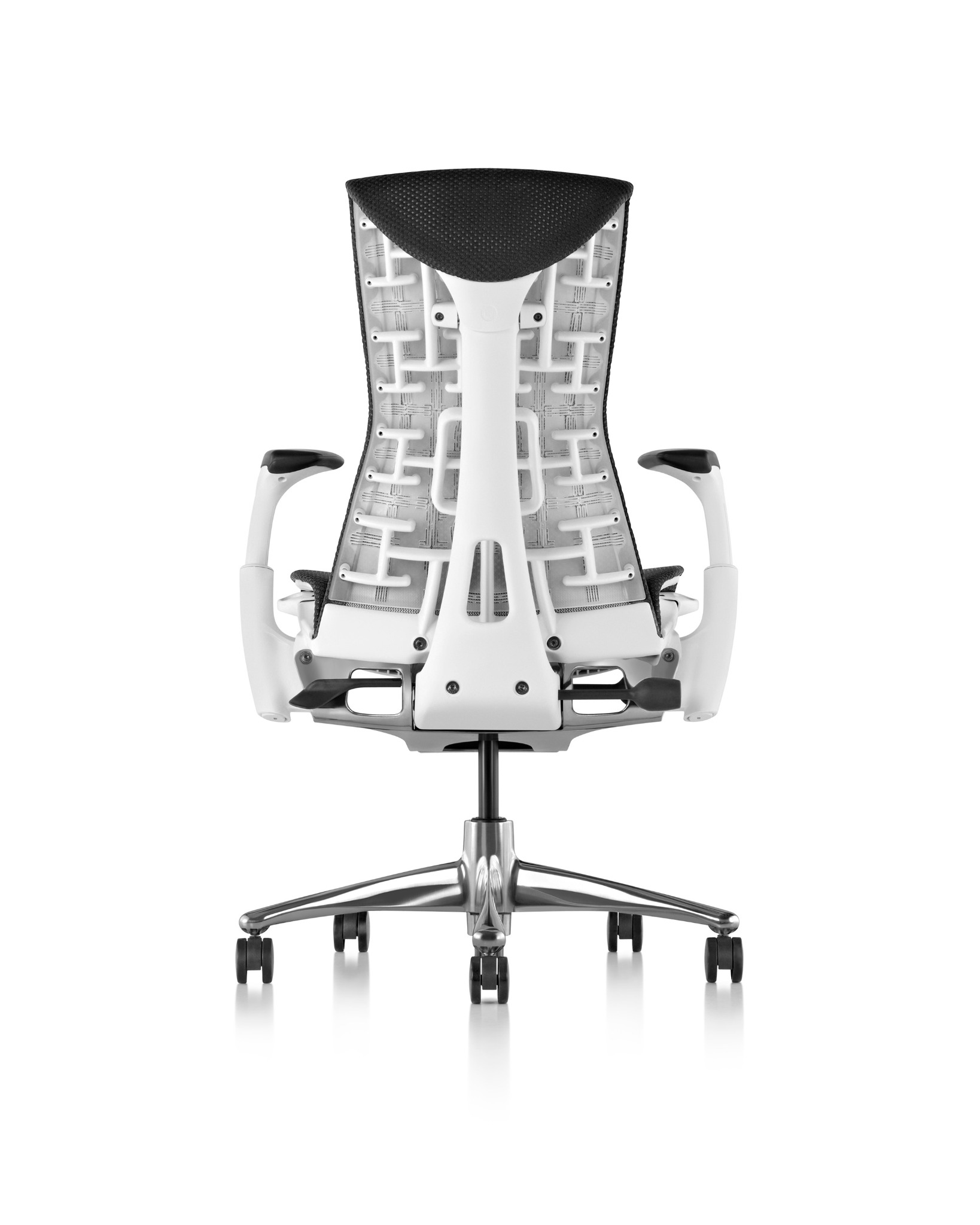
The body is alive.
The chair should
respond.
Embody began with a more radical question than comfort: could a chair actually have positive effects on the body?
Working with Herman Miller, Bill Stumpf and Jeff Weber questioned the assumptions built into conventional ergonomic seating. Our inquiry grew beyond a single ideal posture. It became a study of how people work, move, change position, and live with technology.
The development objects tell that story at many scales—from a tiny spring element to a full-size rig carrying the weight of a person.
open mode / stockholm
Look beyond
the chair.
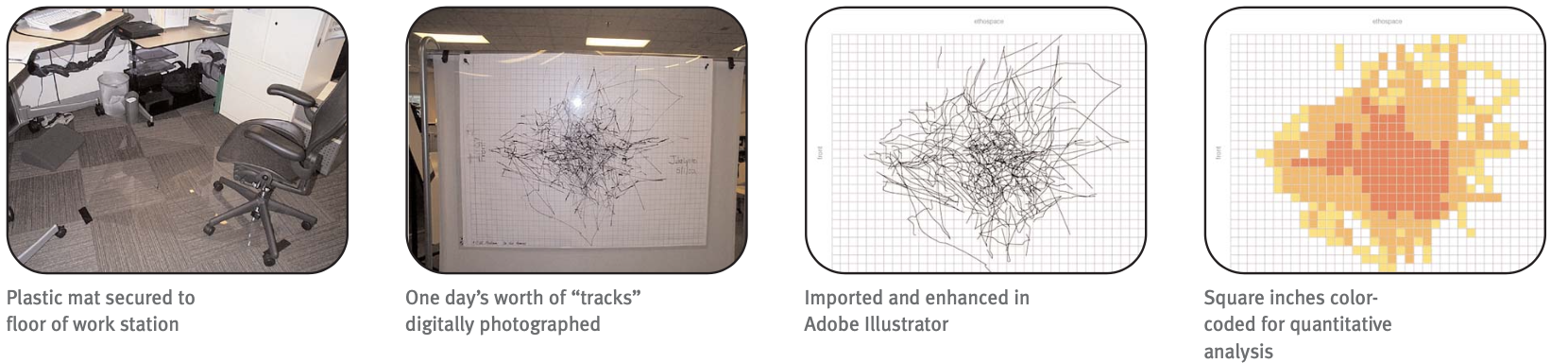
The Stockholm research opened the question. A workstation is a relationship between a person, a task, a screen, and the things within reach. To understand sitting, we needed to understand what happens around it.
Even the marks left on the floor could become evidence. Recording movement made an ordinary workday visible: where the chair traveled, where activity gathered, and how far the experience extended beyond a fixed sitting position.
Variation
is the brief.
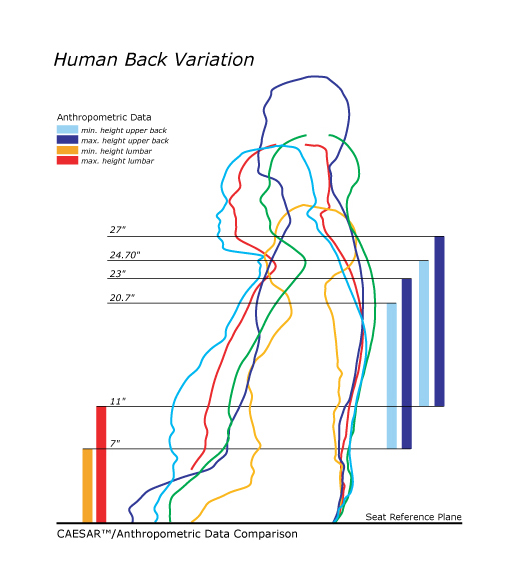
Bodies are not interchangeable. The overlapping profiles in our anthropometric studies made that clear. A contour that suited one person could meet another person in the wrong place.
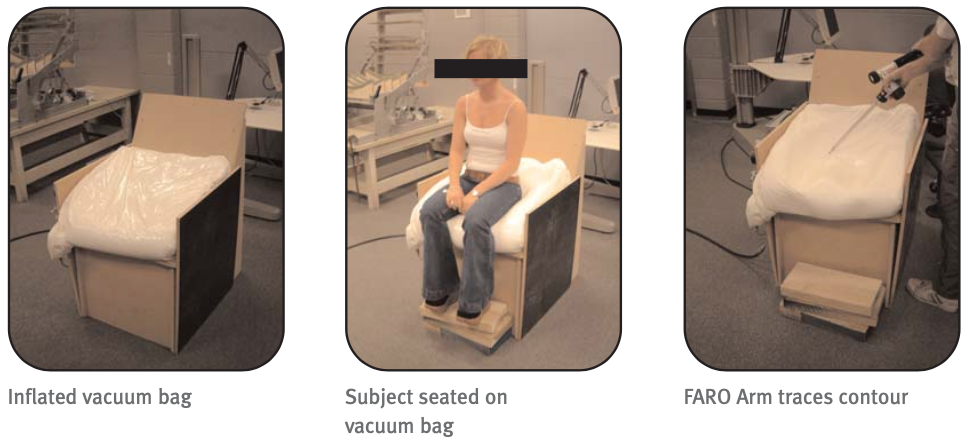
We explored the body directly, too. Vacuum-bag studies captured a seated contour; the measuring arm traced it. These experiments connected the abstract question of fit to a physical surface.
curious play / build to learn
Give the question
something to sit in.
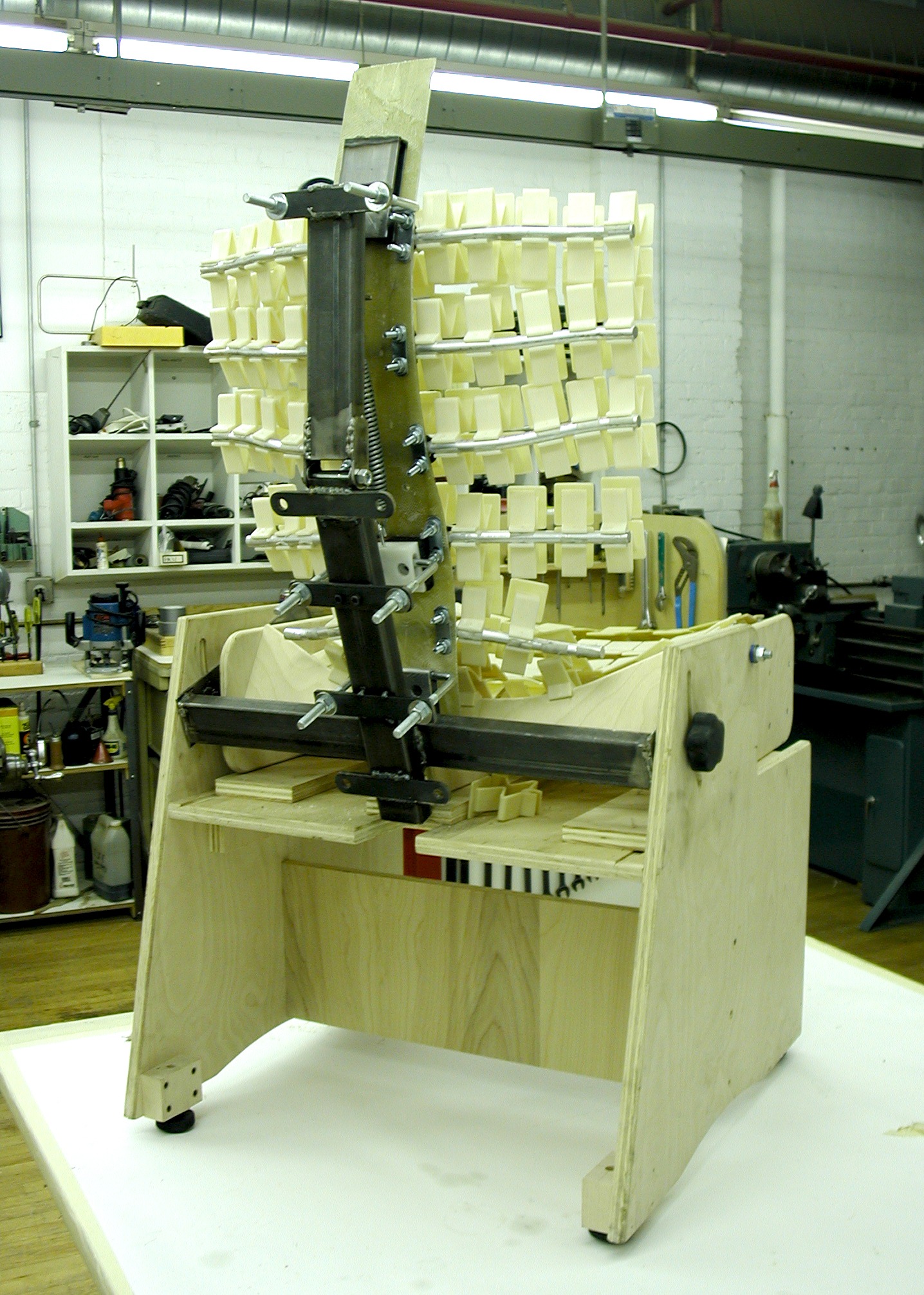
The work moved between sketches, small models, components, and full-scale seating bucks. Each scale exposed a different question. A model could explore the overall arrangement; a rough rig could make a relationship adjustable; a person sitting in it could reveal what the drawing had missed.
Some of these objects barely resemble a chair. That was useful. We could isolate a behavior before asking it to become a finished product.

“You can’t design
Jeff Weber / Herman Miller’s Embody design story
without empathy.”
pixelated support / the detail of a detail
Many small responses.
One connected surface.
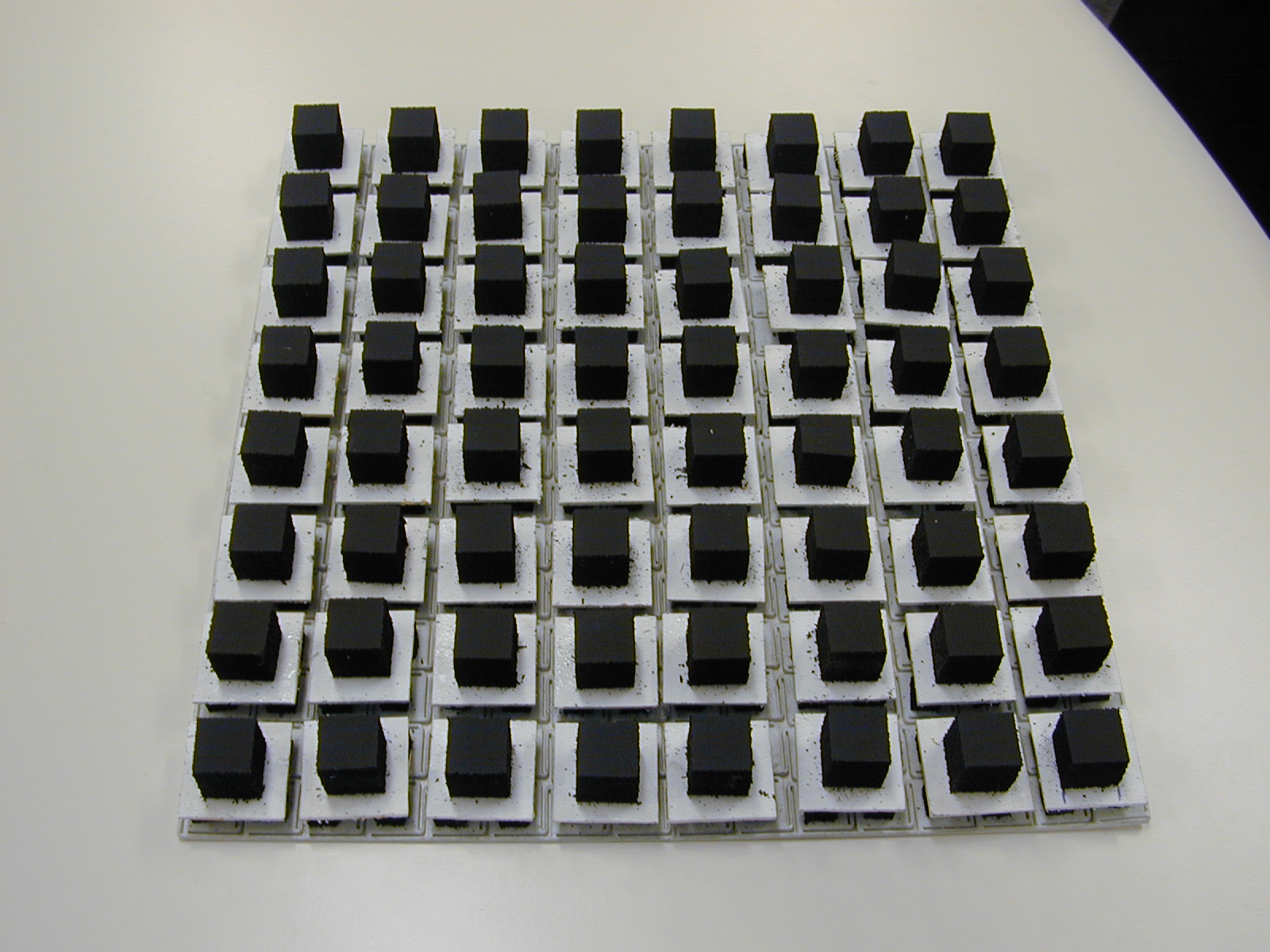
A single surface has to meet many different contours. We explored another way of thinking about support: a field of smaller elements, able to respond locally while working together.
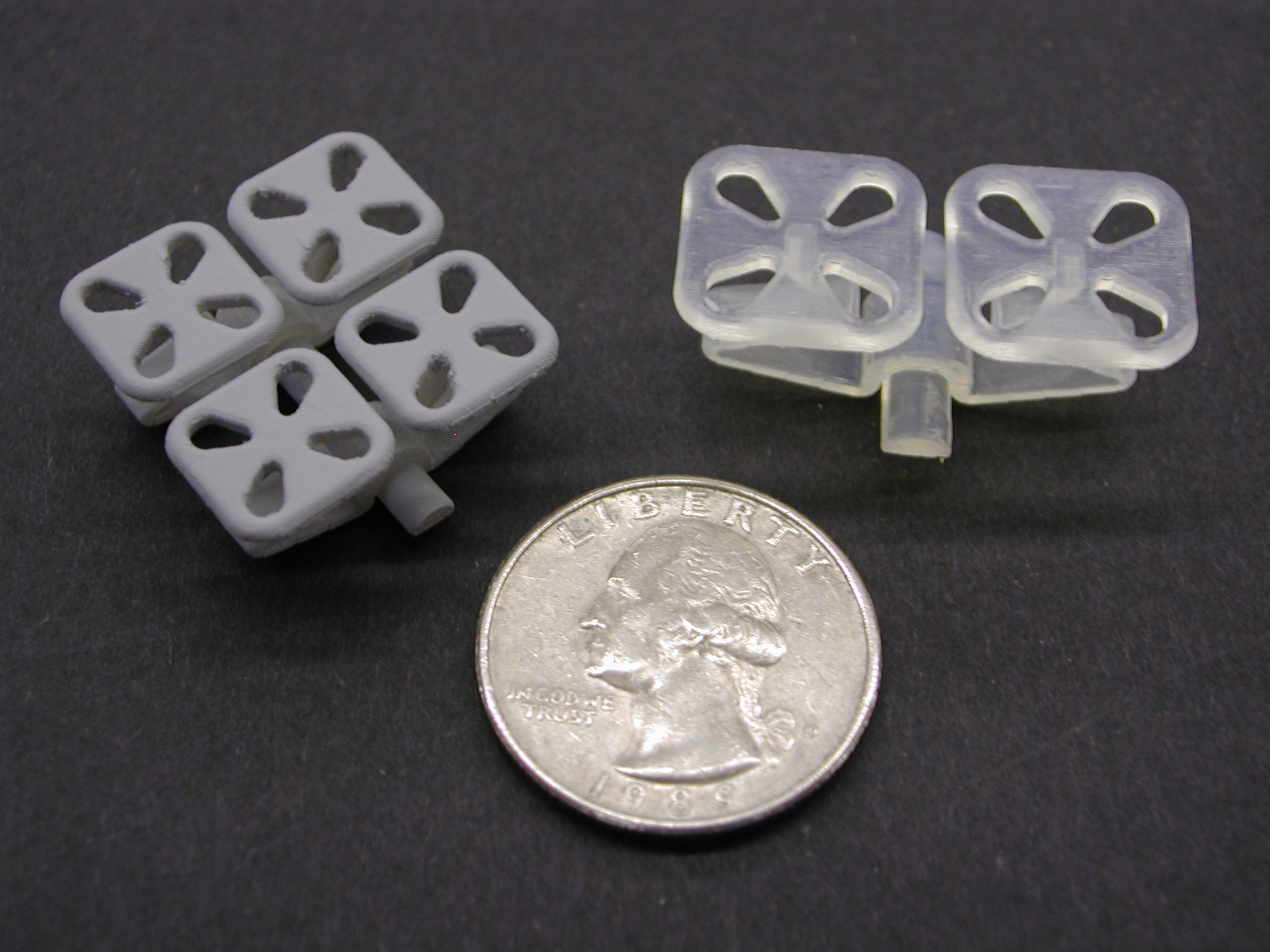
We explored separate blocks and plates, small spring components, and linked structures. The question became more precise at each scale: how can an individual element yield, and how does its movement affect its neighbors?
A little movement.
Repeated.
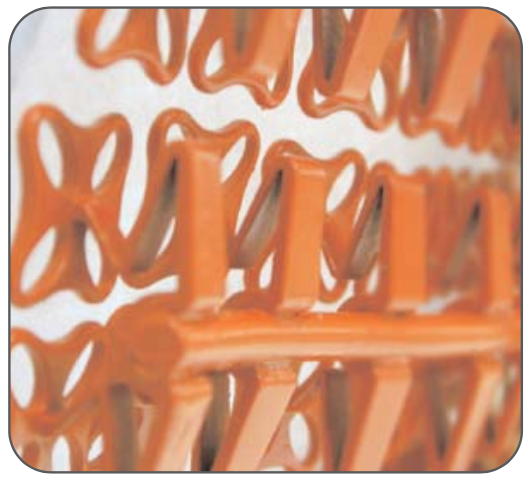
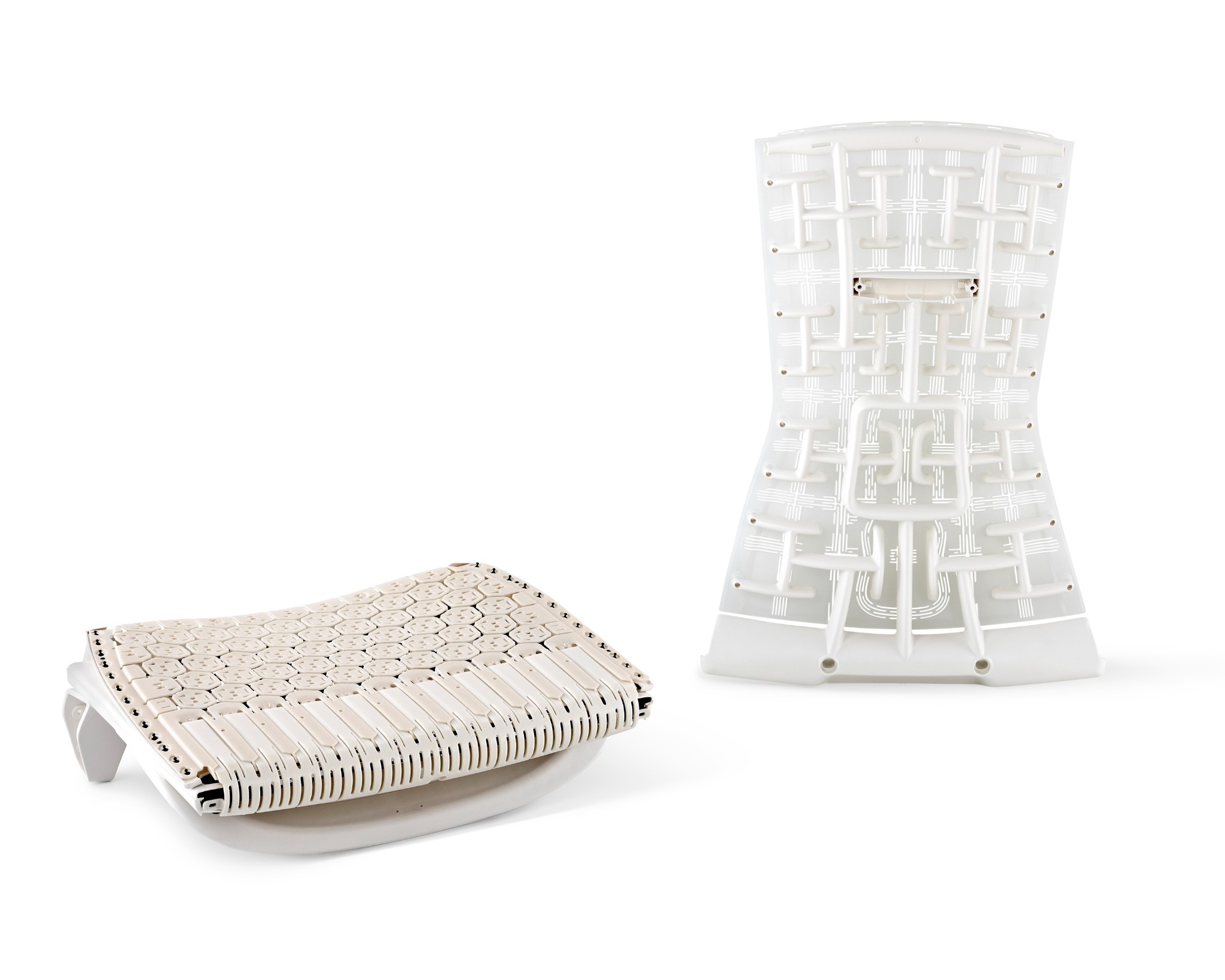
The pixel is only part of the idea. The connections matter just as much. Small openings, curved links, and the structure beneath the surface determine how the assembly can respond.
Build to Learn brought the inquiry down to these details. We could hold a component, flex it, place it in an assembly, and return to the whole chair.
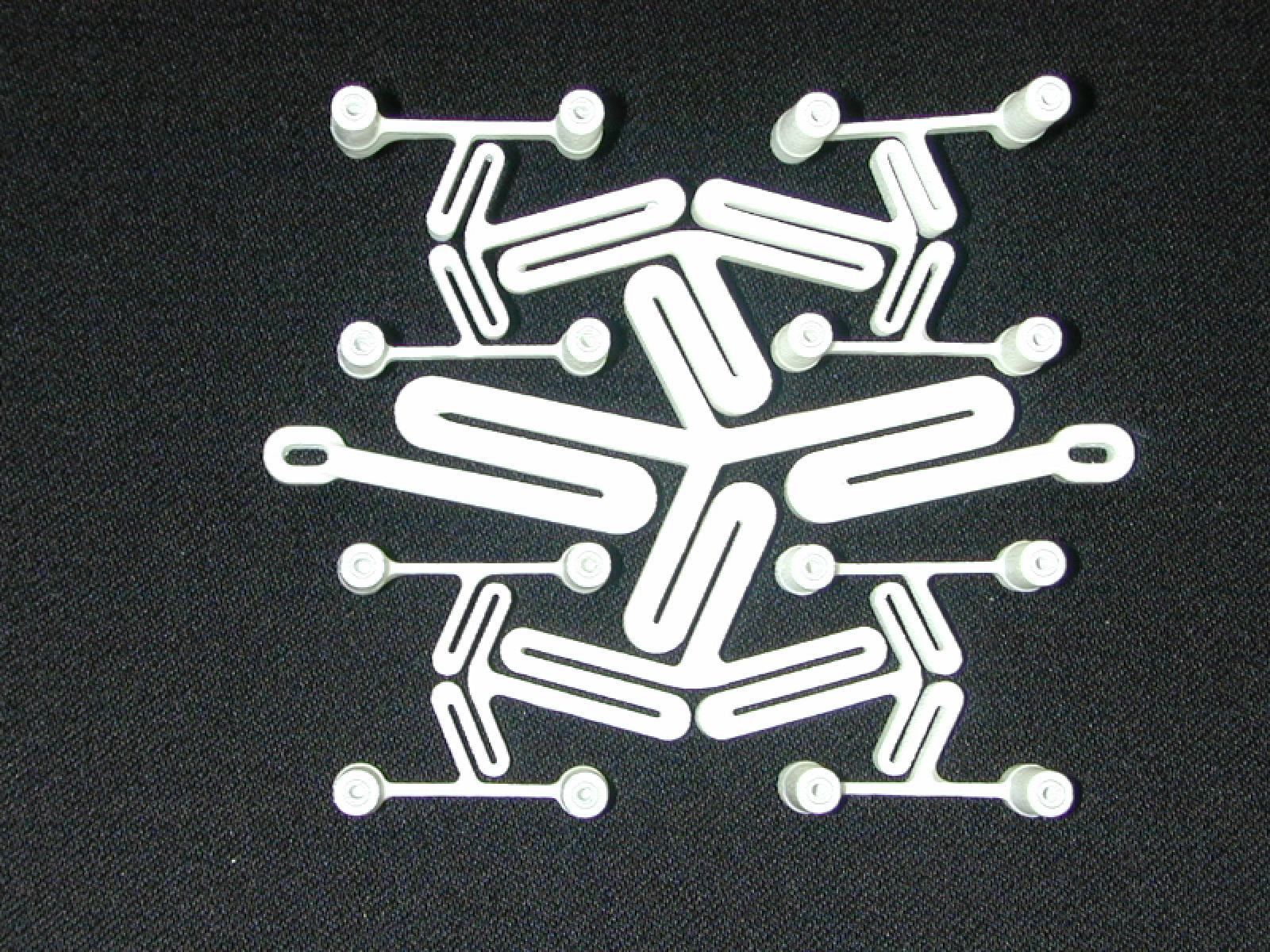
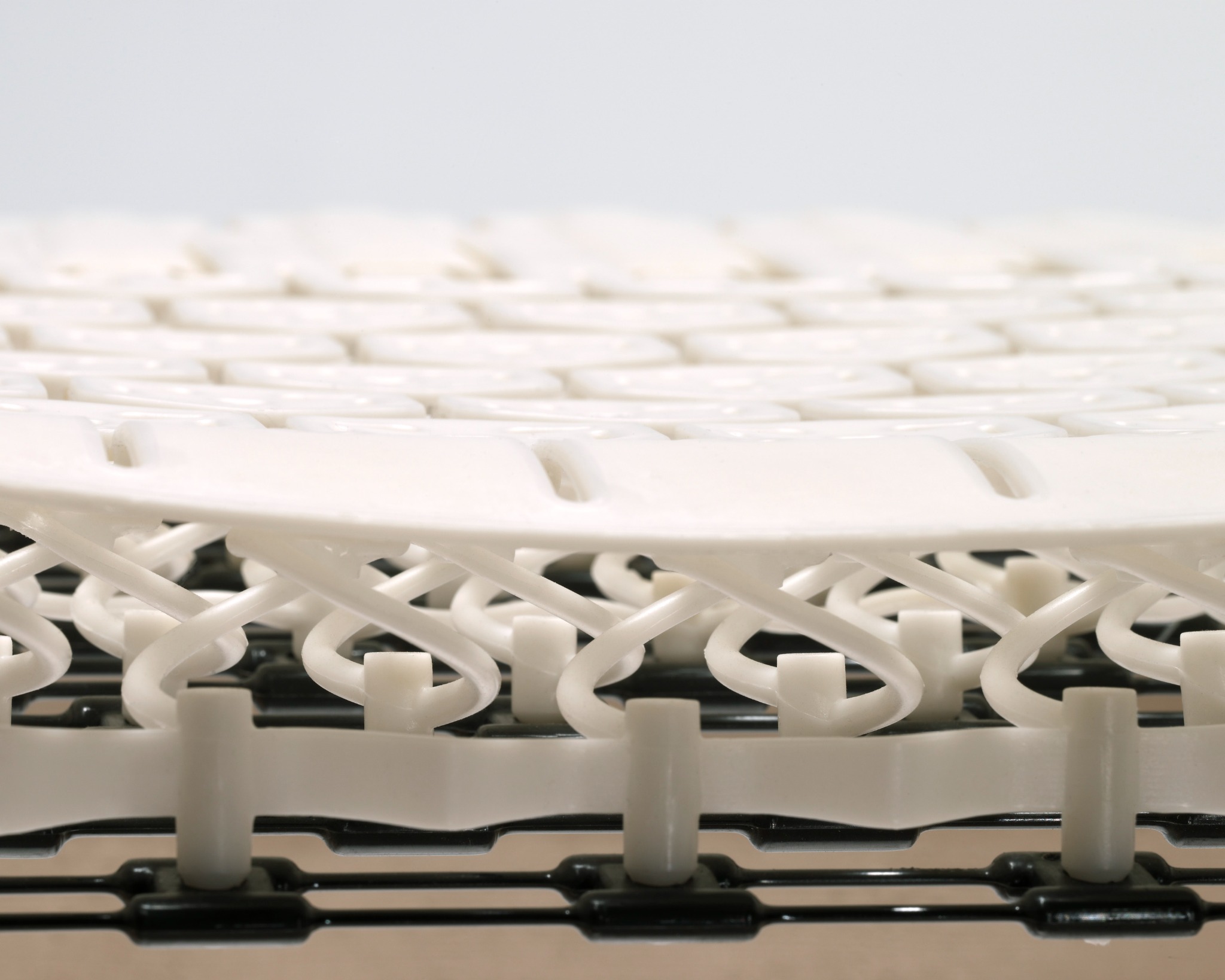
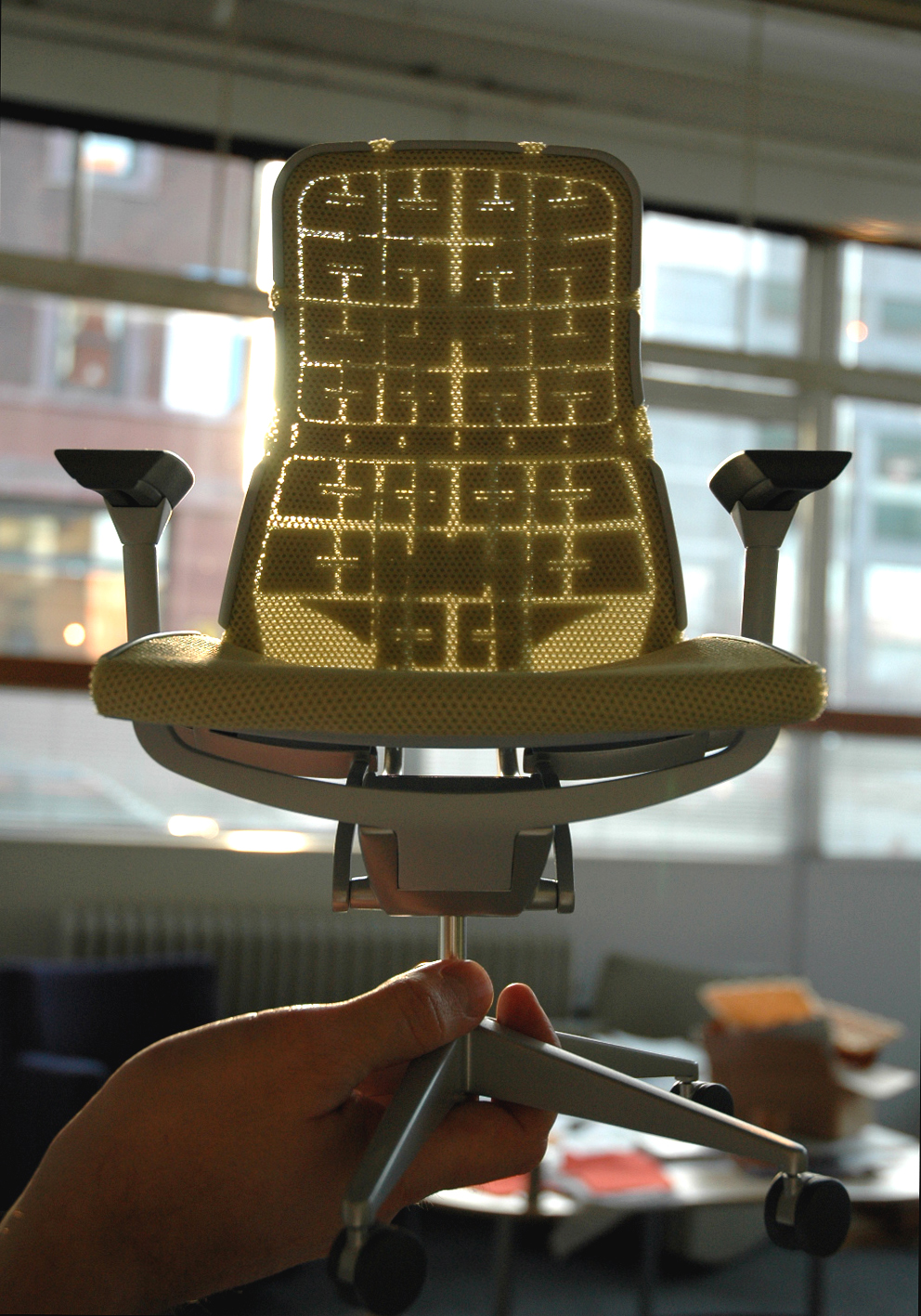
In the finished chair, Pixelated Support lets the seat and back respond to small changes in the sitter’s position. Pressure is shared across many interconnected elements. What feels continuous to the body is made possible by a structure with many places to move.
back development / fit and flexibility
A spine.
Ribs. Room to move.
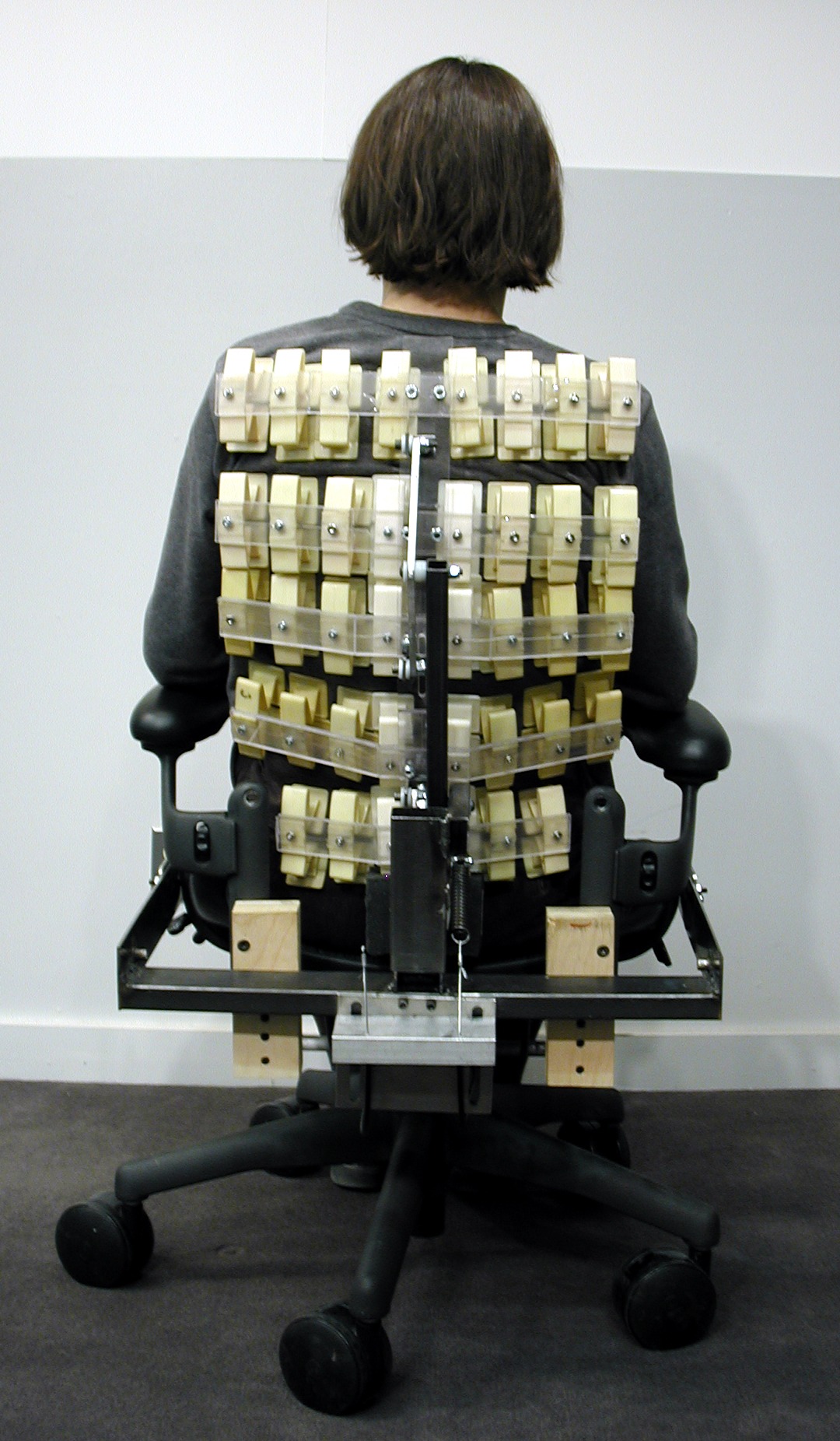
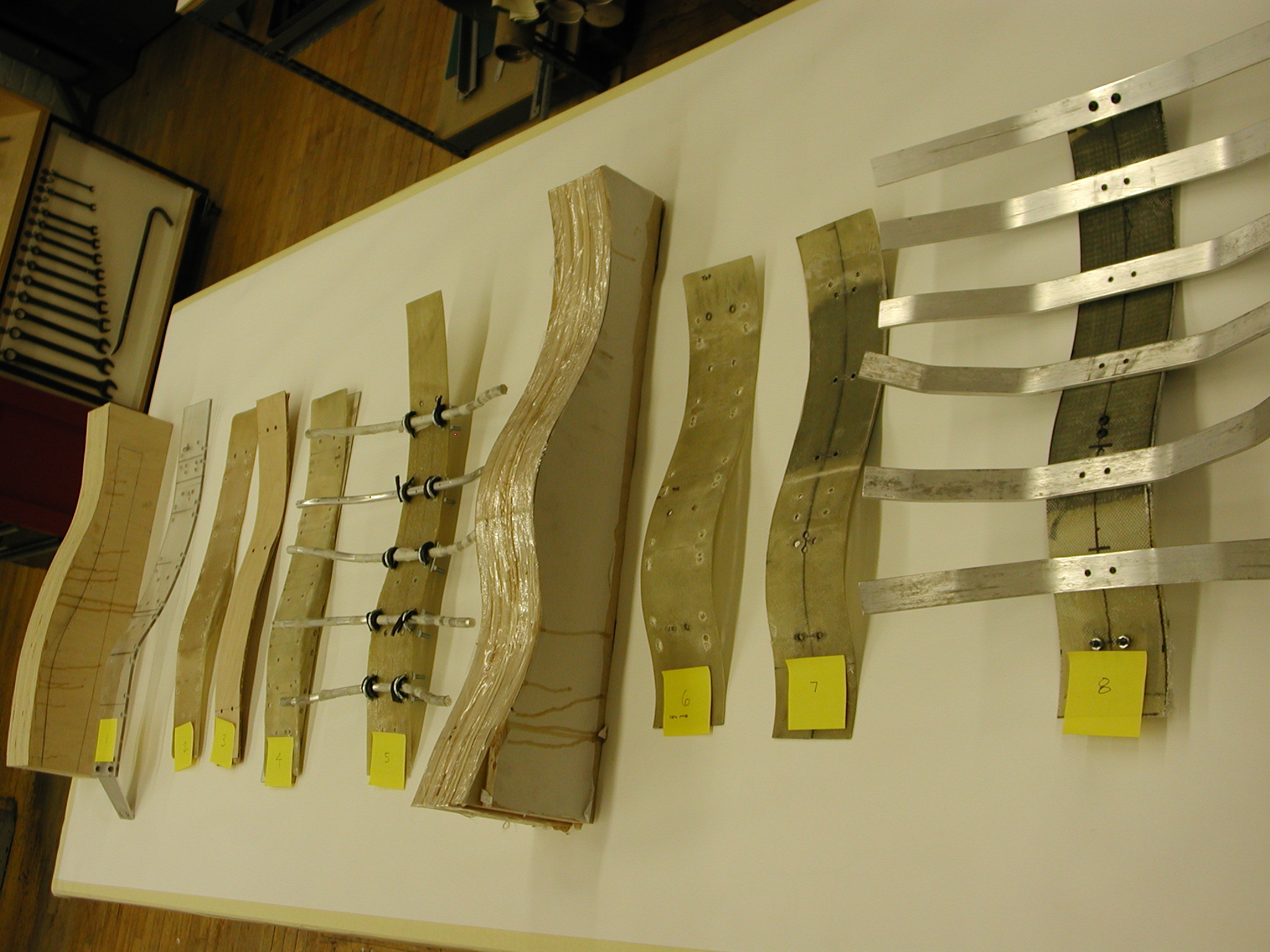
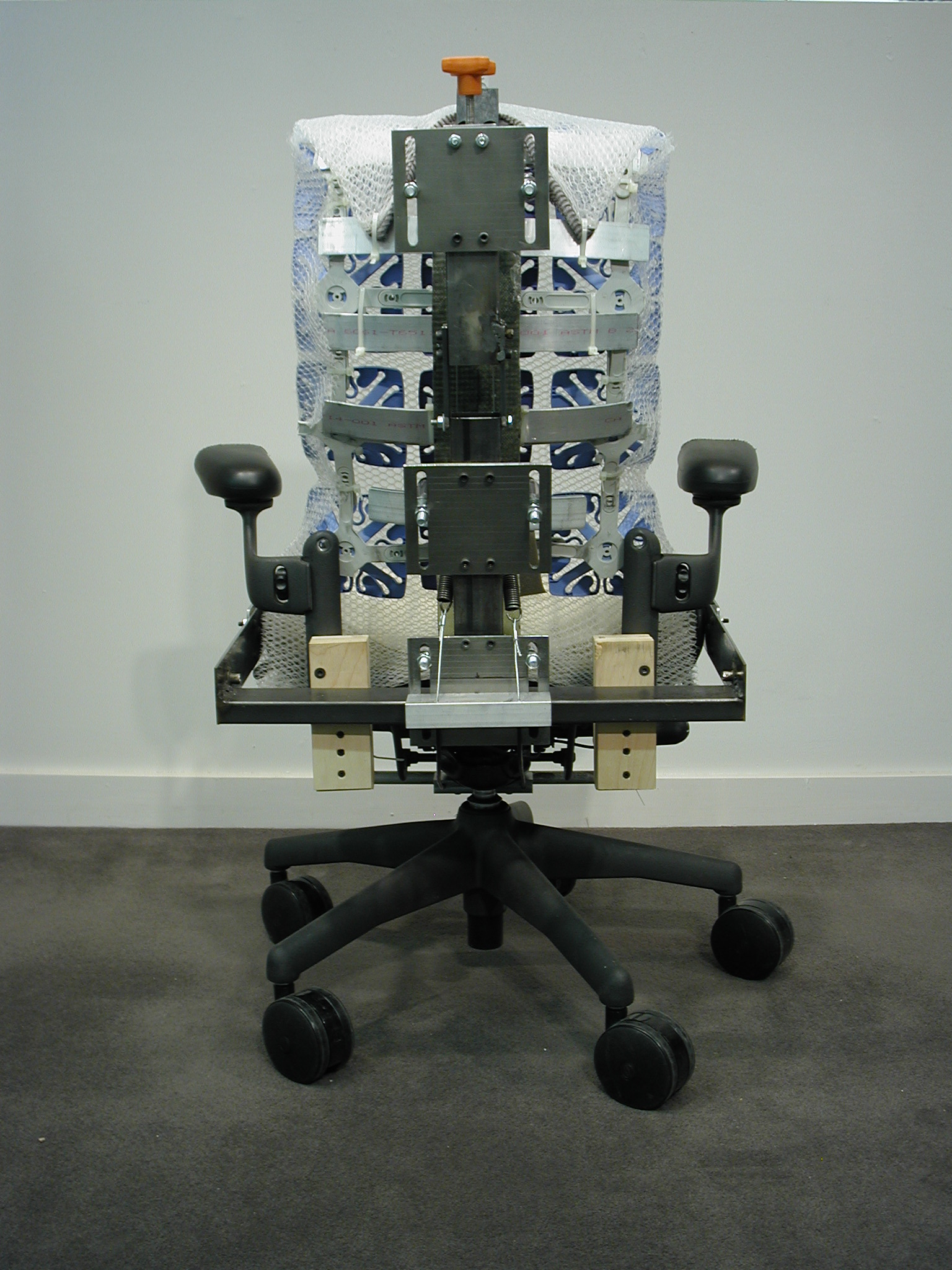
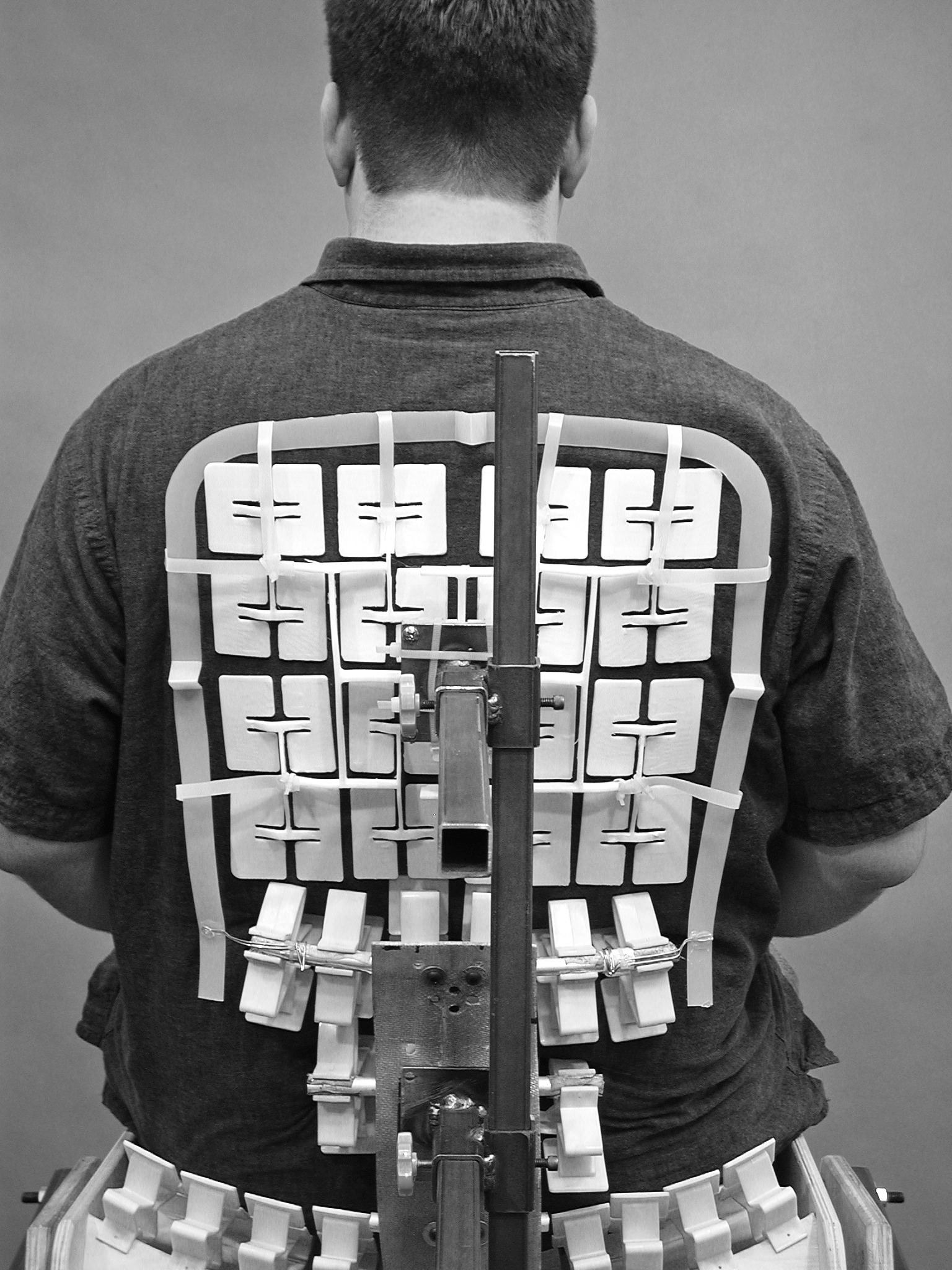
The back could not be resolved as one fixed curve. It had to meet different people and remain useful as they changed position. Our experiments separated the supporting surface from the structure behind it, allowing each relationship to be explored.
Material samples, curved members, mesh, links, springs, and adjustable rigs gave that inquiry a physical vocabulary. The exposed prototypes let us look closely at what was carrying the load and what was allowing motion.
Fit the person.
Keep the motion.
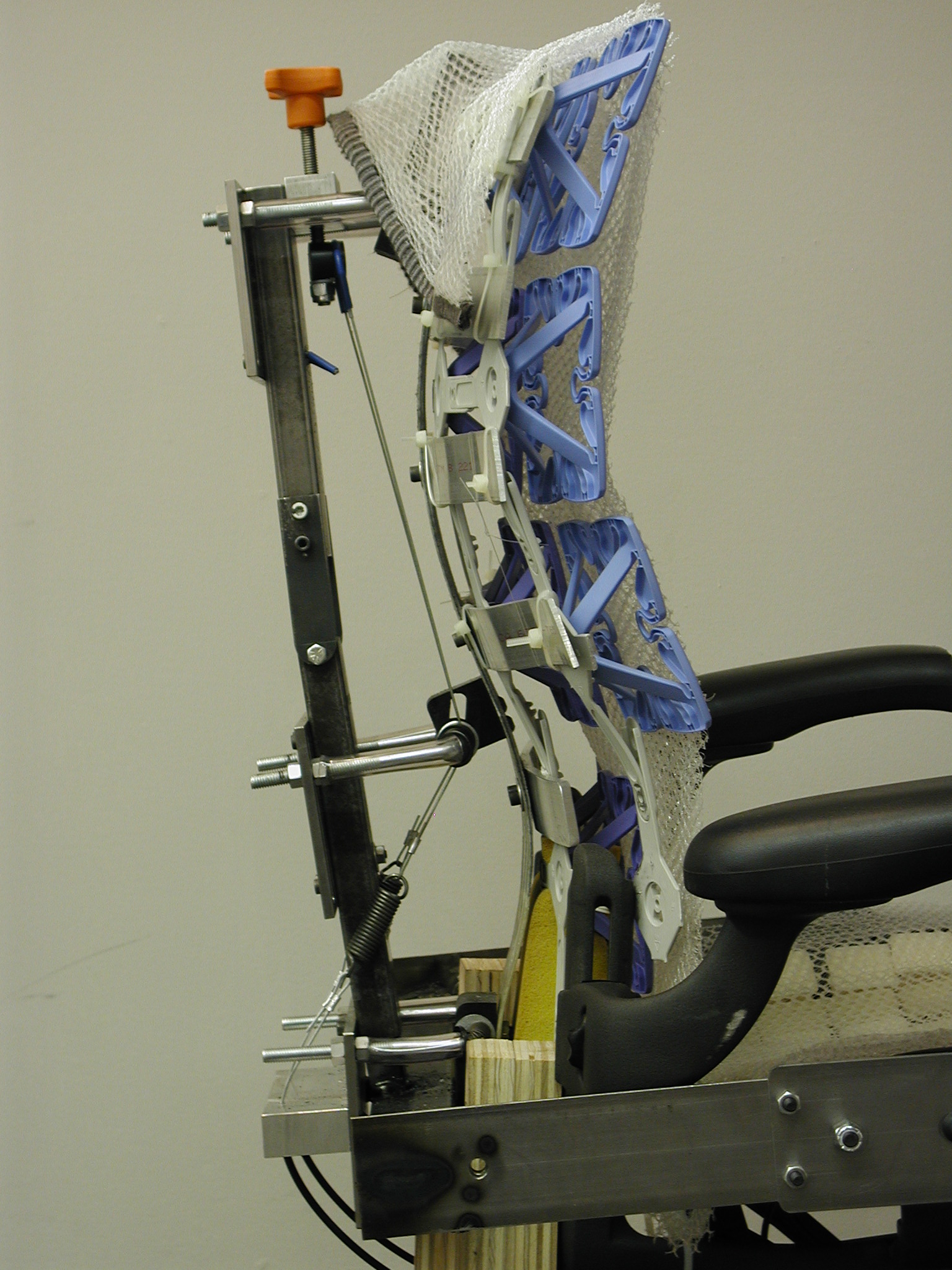
The body remained the reference. A back-support rig with a sitter in place brings the question into focus: where does support meet the back, and what happens when the person changes position?
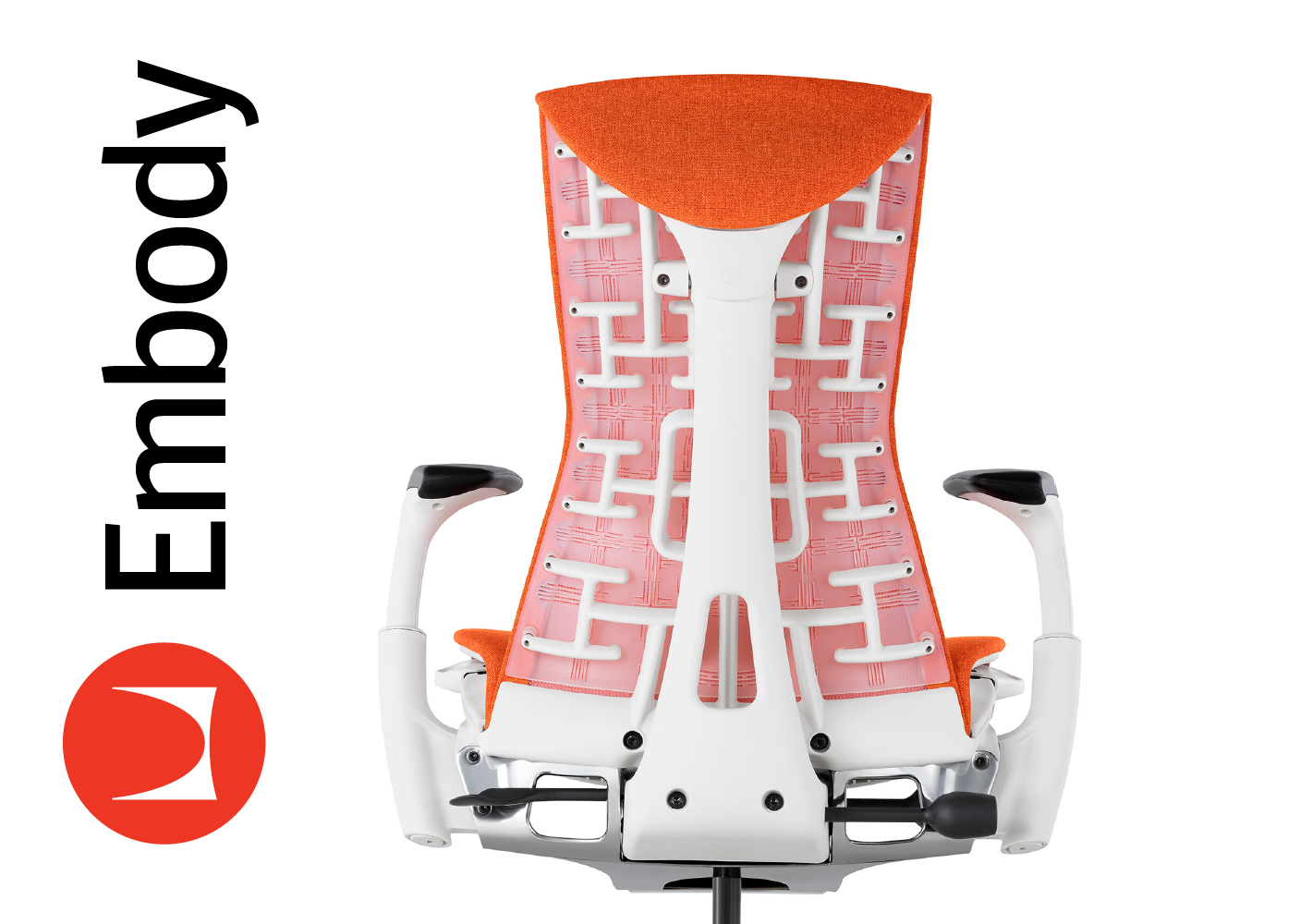
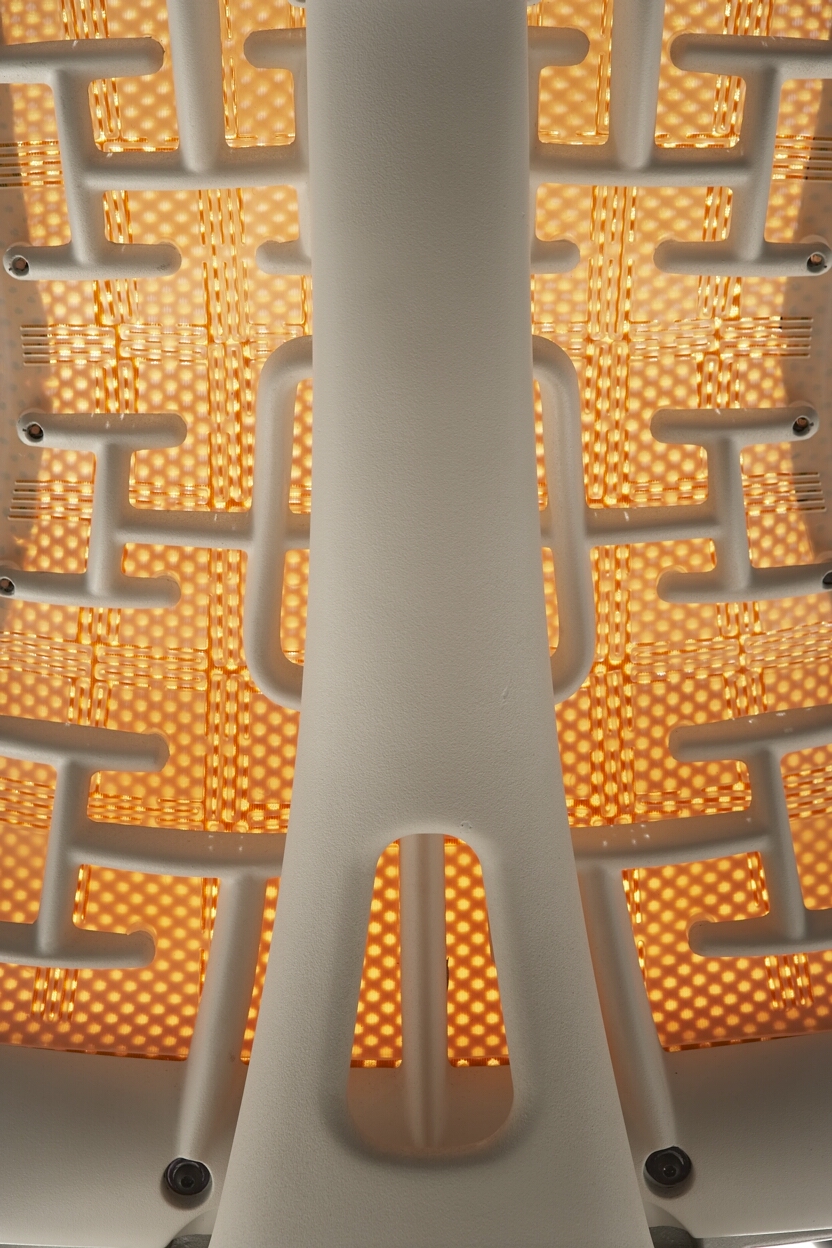
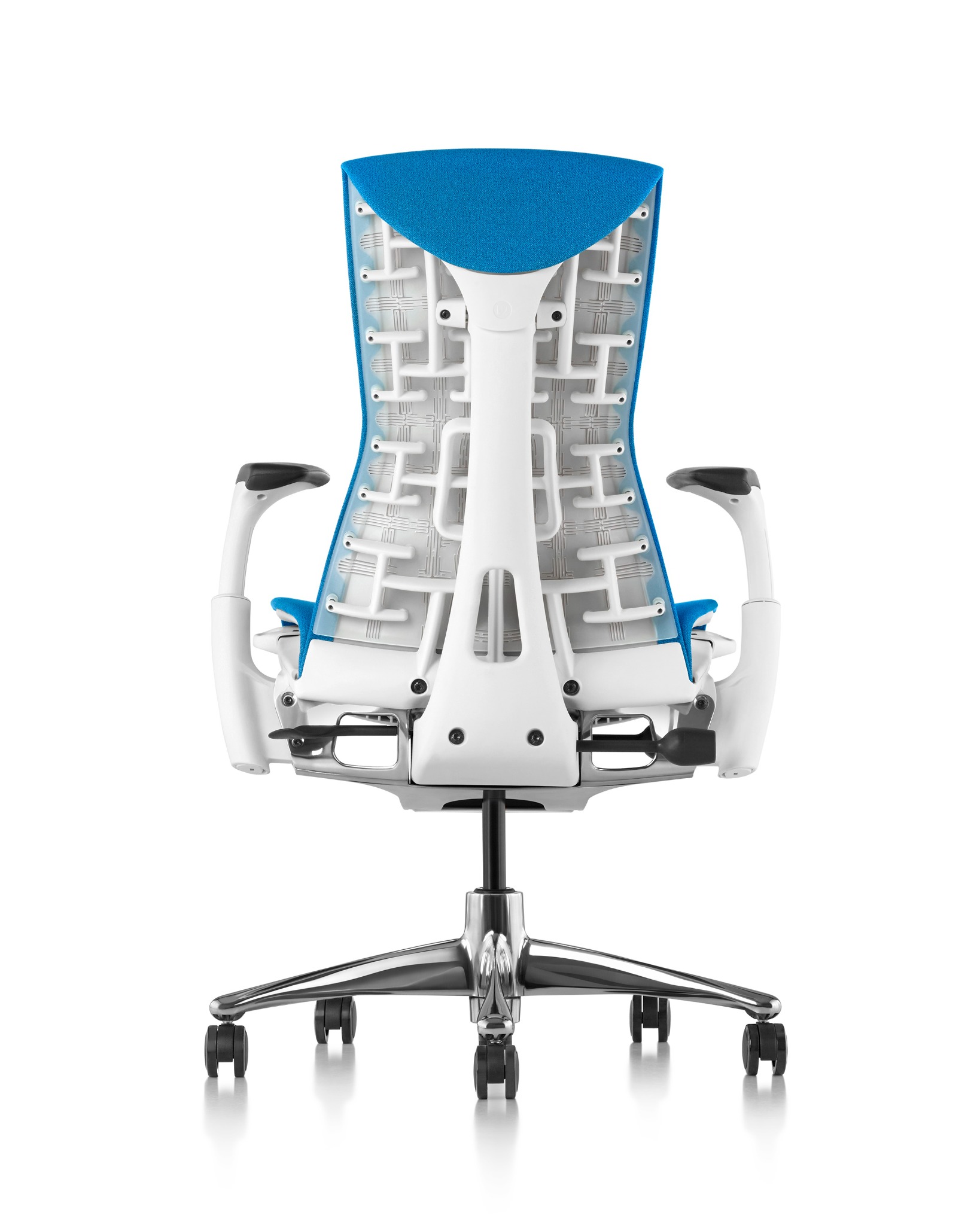
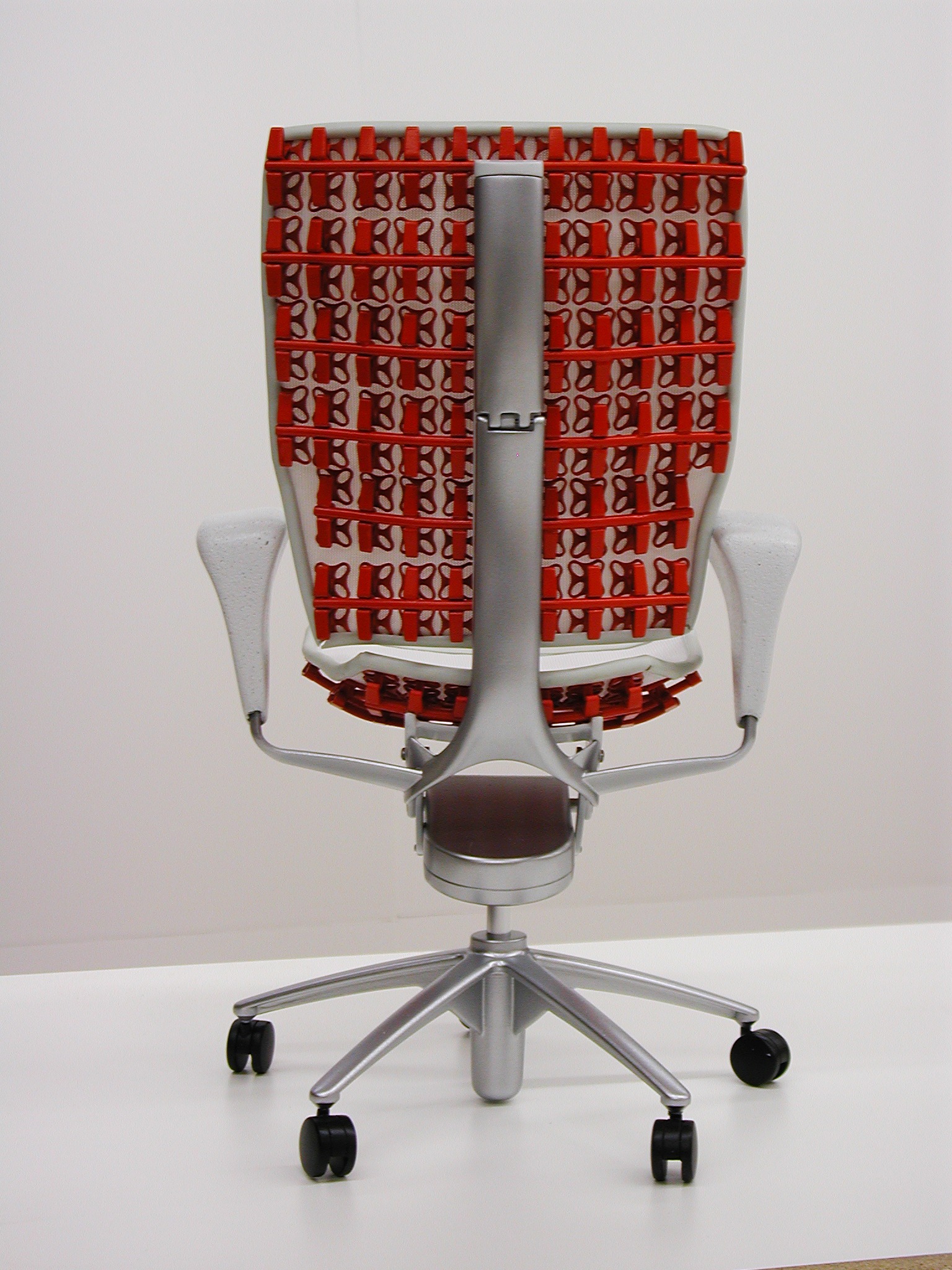
In Embody, a central spine and flexible ribs form the visible back structure. Backfit adjusts the backrest to the sitter’s spinal curve; the back can then respond as posture changes. Fit establishes the relationship. Flexibility allows it to continue.
movement / a whole-body relationship
Support the person
between positions.
Upright and reclined are useful descriptions, but a person passes through many positions between them. The seat, back, arms, and work surface all influence that experience.
Posture sequences kept the work connected to an actual task. A keyboard and a monitor stayed in the picture while the body changed position. The mechanism had to be considered as part of that larger relationship.
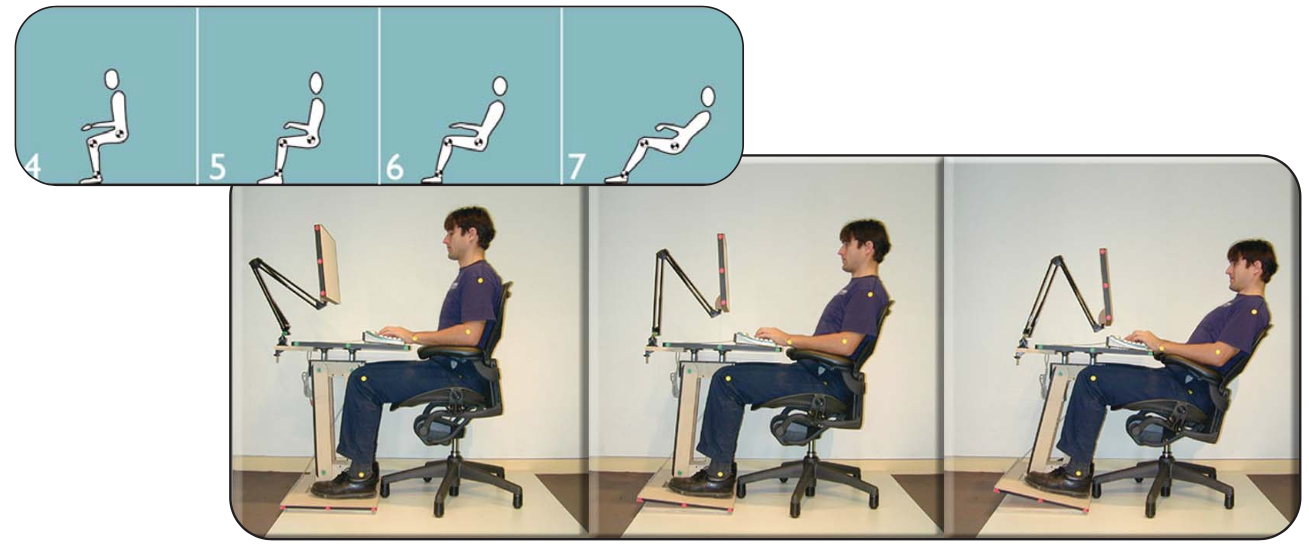
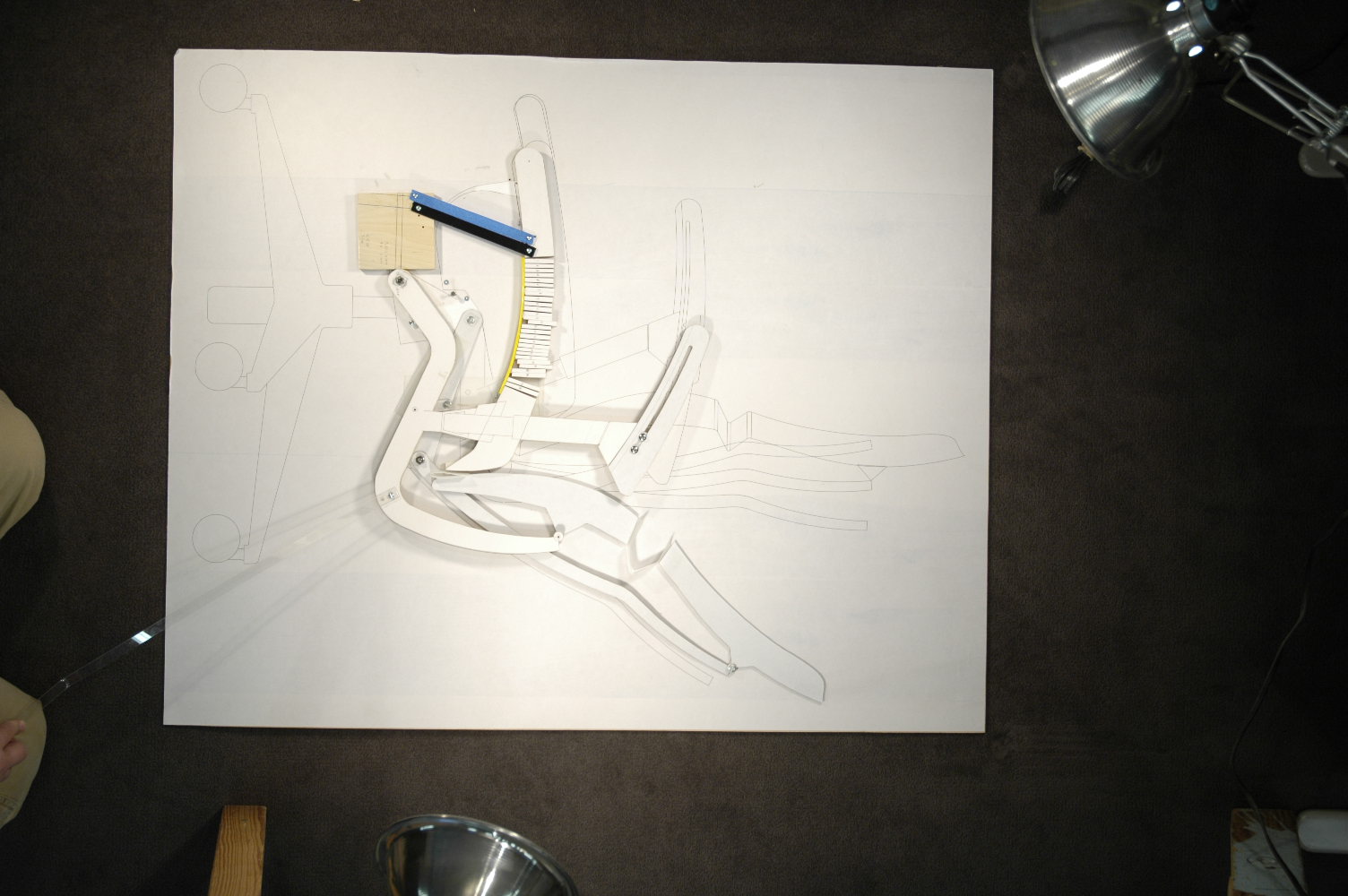
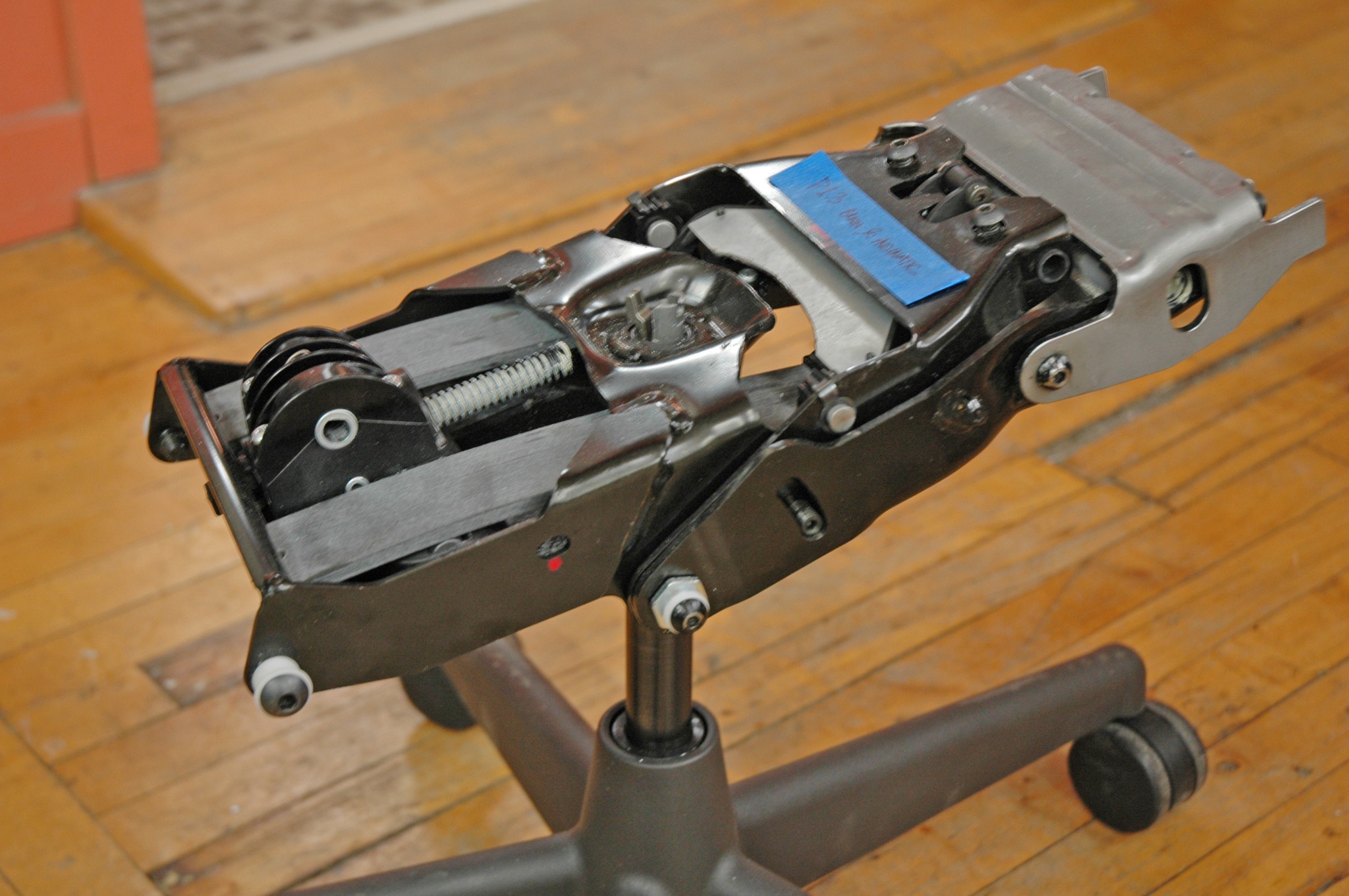
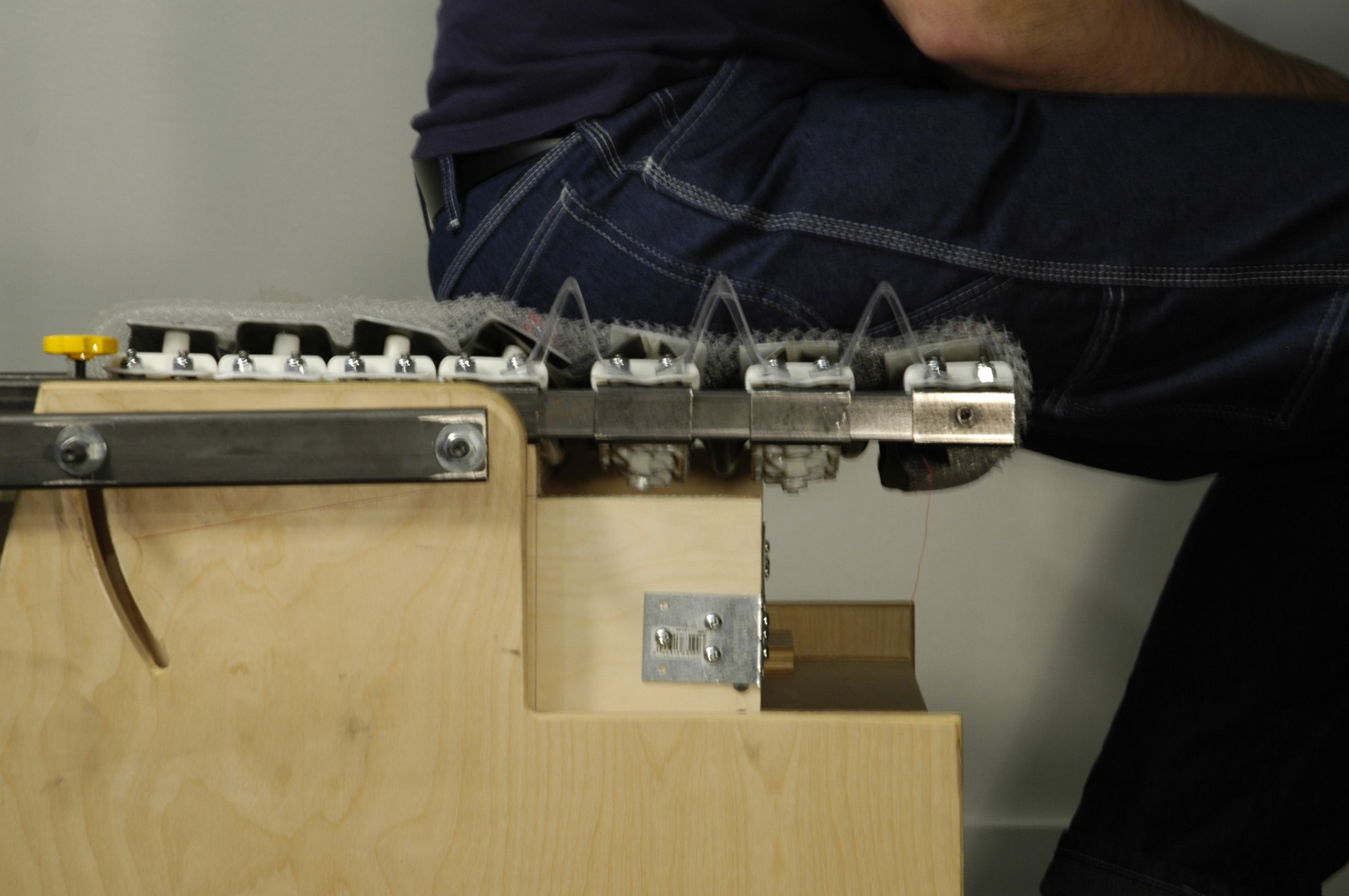
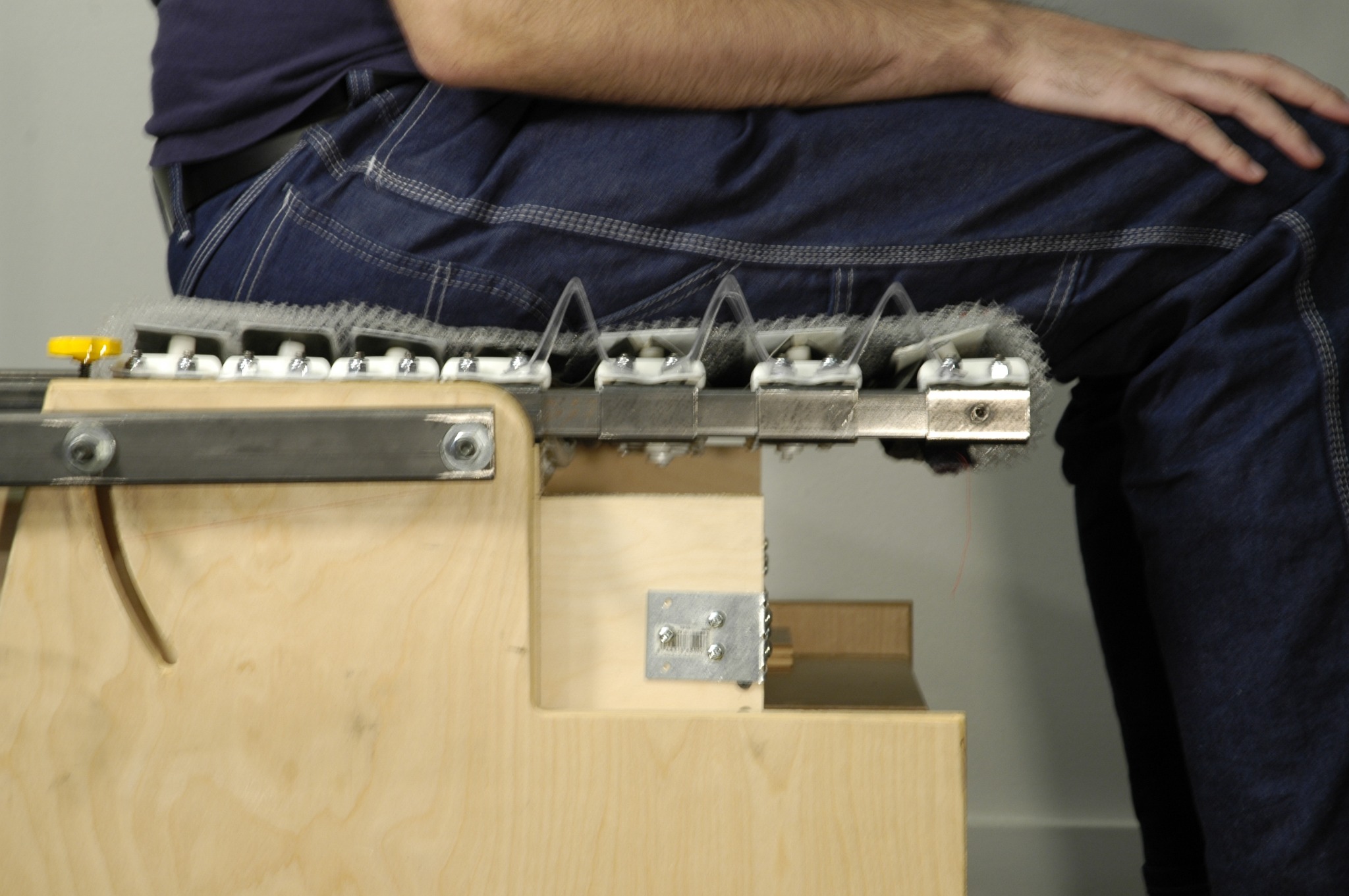
A full-scale linkage model made movement visible over a drawing. A metal prototype made it physical. At the front of the seat, another set of rigs explored the contact between support and the moving body.
These were connected problems. The large movement of the chair and the small movement at its edges had to feel like one experience.
function / form / realization
Let the structure
become the character.
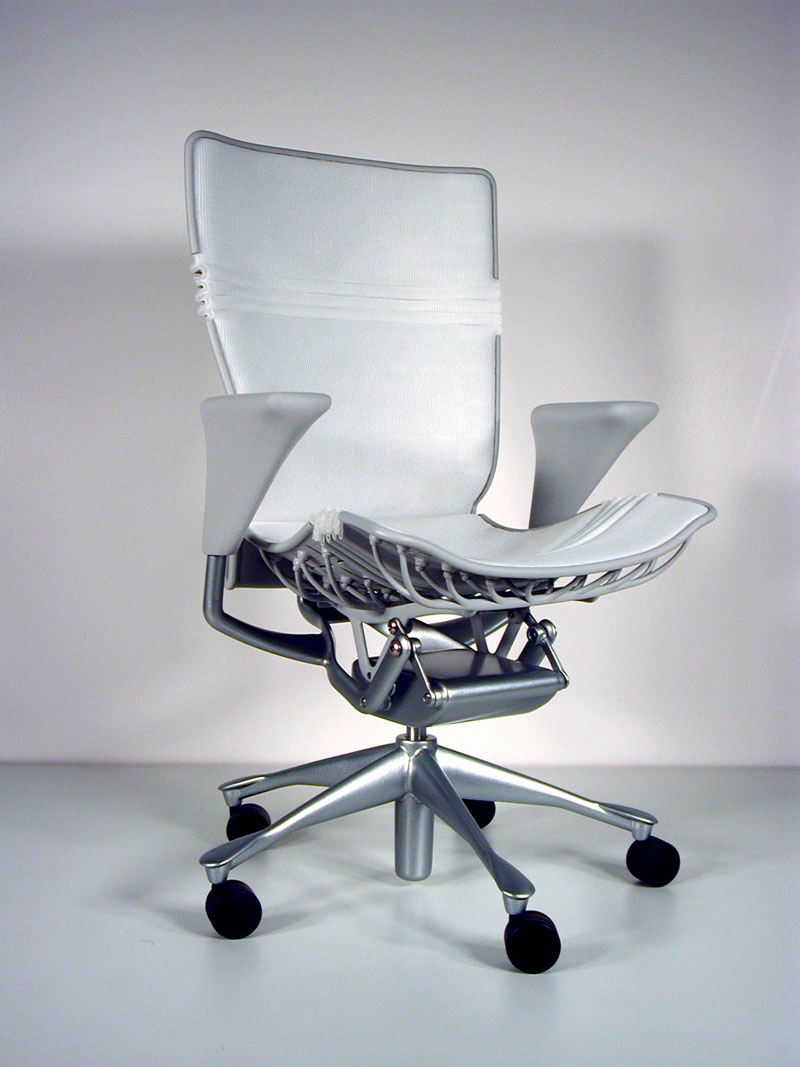
As the experiments became a chair, their relationships had to become coherent. Support surfaces, spine, links, adjustments, upholstery, and base could no longer be considered separately.
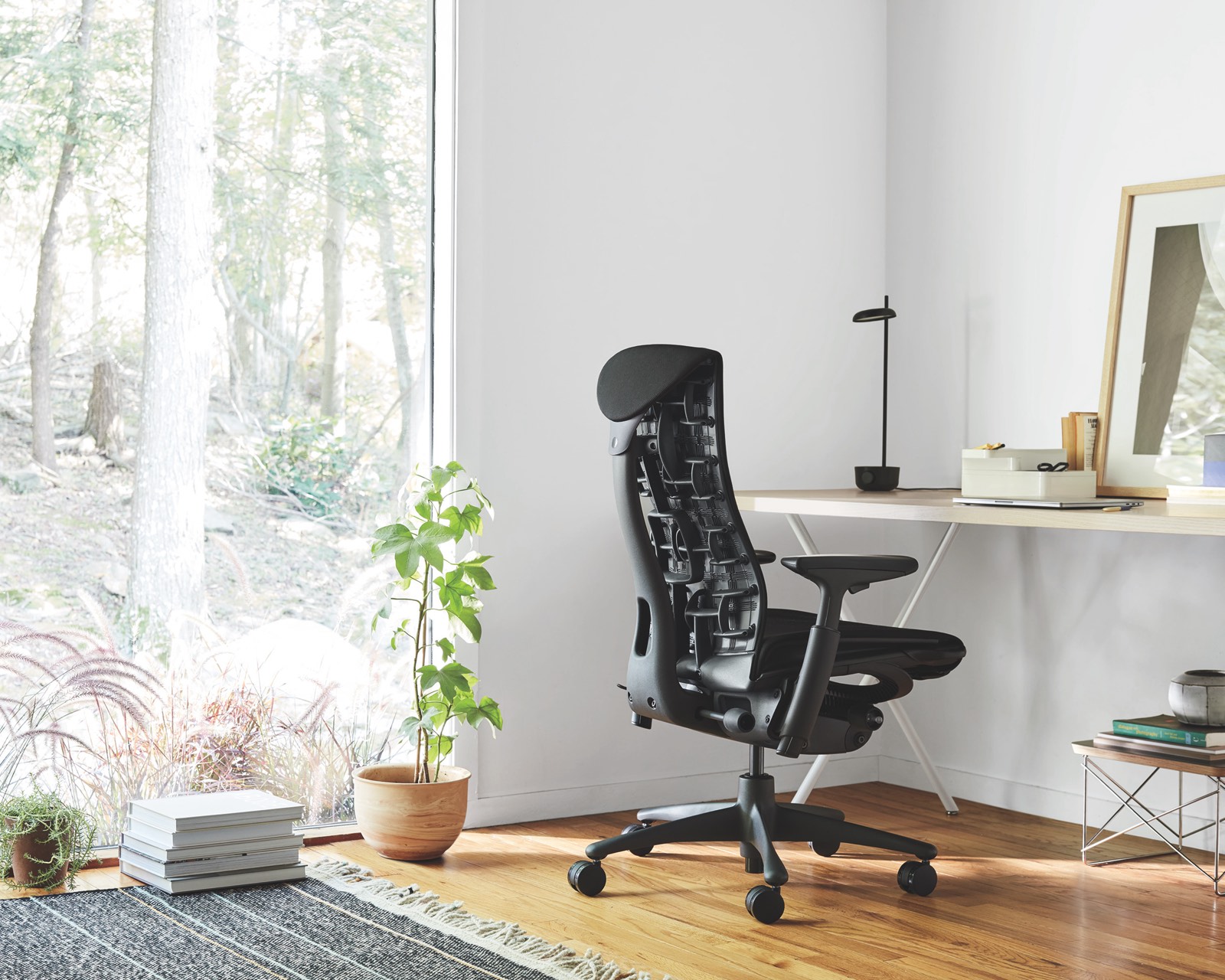
Embody’s character comes from making that structure legible. The back reveals its spine and ribs. The seat contains a layered support system. Its form lets us see something of the behavior we feel when we sit down.
From the workbench
to a working day.
The final test of the idea is an ordinary experience: reaching, concentrating, shifting, leaning back, and returning to the task. The complexity belongs in the chair so that the person can get on with the day.
The lasting idea is larger than a single mechanism. Design for the body as something alive, varied, and always in motion.
open mode. curious play. build to learn.
A chair shaped
by learning.
The unusual experiments were the work. Each made a question tangible, brought the body back into the discussion, and helped turn an ambitious idea into a system of support.
Bill Stumpf + Jeff Weber
The inquiry began with Bill Stumpf and Jeff Weber. After Bill’s death in 2006, Jeff continued the work, developing Embody’s function and form. Development images from the Studio Weber archive; finished-product photography from the supplied Herman Miller archive.
a conversation with the designer
In Jeff’s words.
Jeff Weber on posture, movement, and the pixelated support behind Embody. NeoCon, 2009.
Use the video controls to start the film.
further reading
What would you like to know about Studio Weber?