aeron / the design story
A chair for
a changing
world.
The convergence of people, technology, and work—and the physical experiments that gave it form.
People.
Technology.
Work.
Aeron was not simply an attempt to make a better office chair. It was a response to a larger shift in the relationship between people, technology, and the way work was changing.
Meaningful advancement rarely comes from one isolated idea. It happens when multiple forces align. Research was pointing toward a future in which the computer would become a primary work tool. That changed the design question.
How do we better support the human-computer interface?
open mode / a new relationship to work
The workplace changed.
The body came with it.
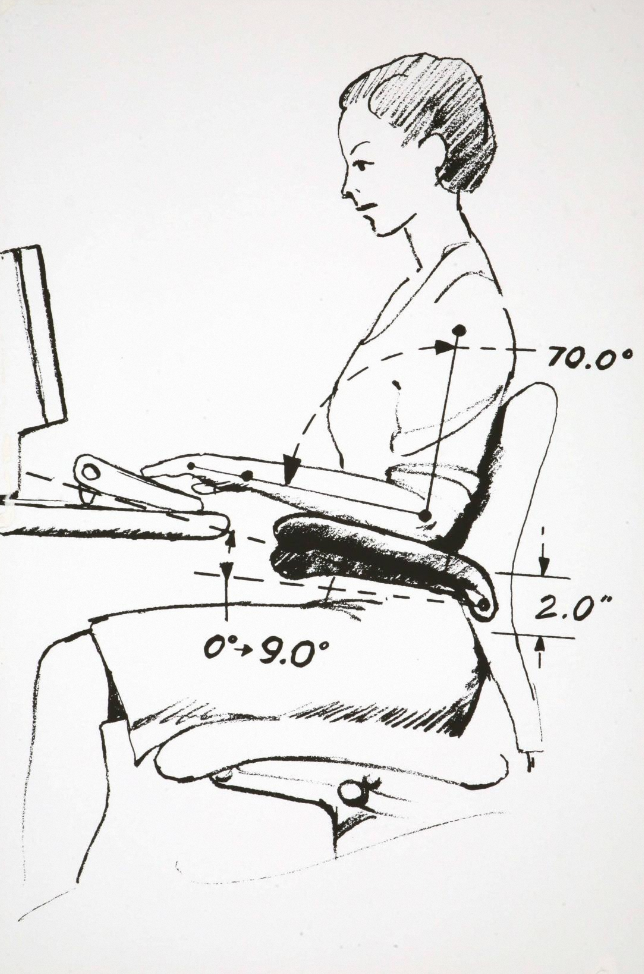
The computer was changing what people did all day and how they did it. Attention moved toward the screen. Hands stayed closer to the keyboard and mouse. People shifted between focused individual work and collaboration.
The chair, desk, display, body, and work process were becoming one connected system. Aeron emerged from understanding that convergence rather than treating the chair as an isolated object.
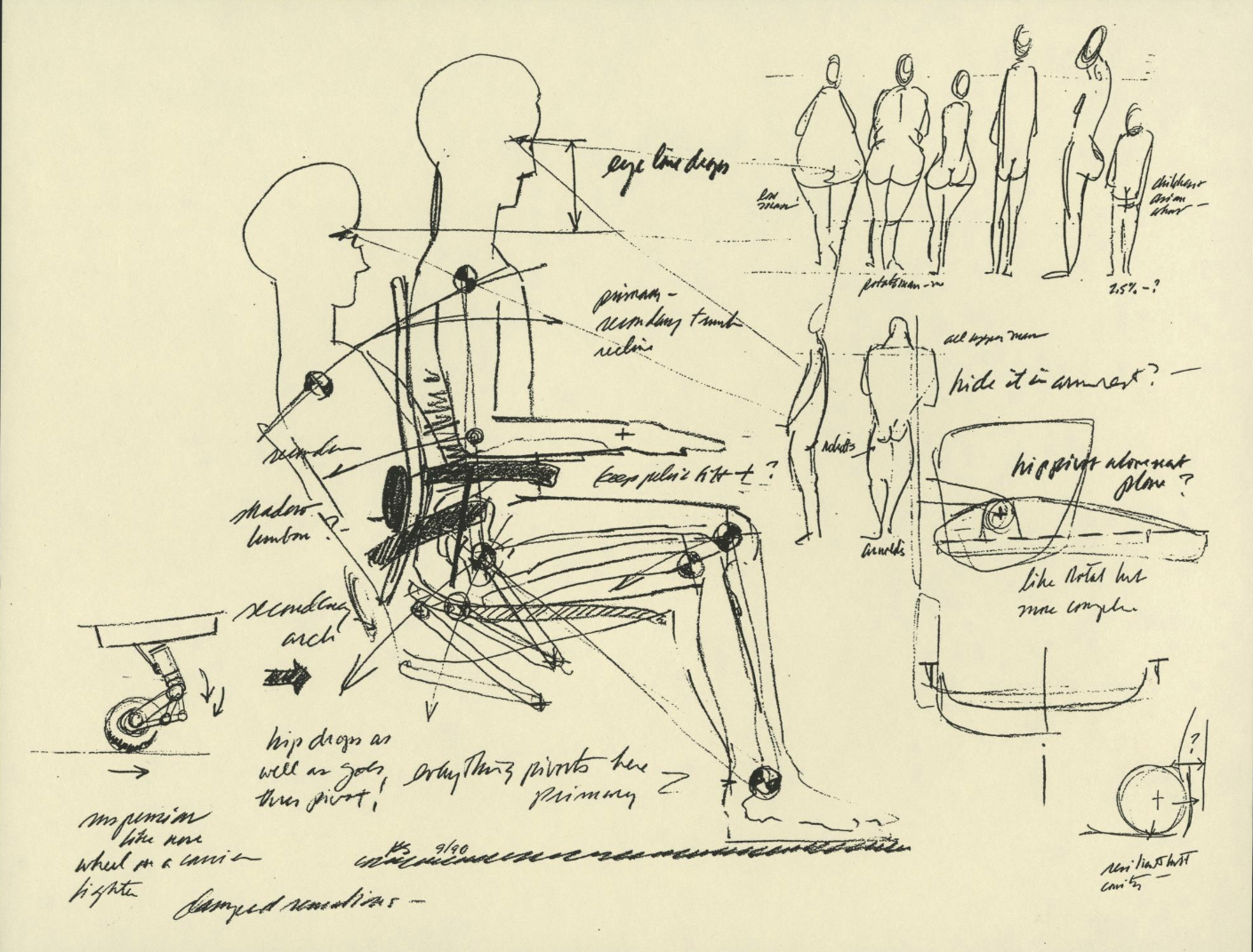
The drawings keep those relationships in view: eyes to screen, arms to work surface, back to support. The chair belongs to the whole scene.
“Aeron wasn’t about re-thinking the office chair for performance. It was about how we could support the human while interfacing with computers.”
Jeff Weber / Studio Weber Aeron case study
from the archive / echo concept book
Before the chair,
a way of seeing.
Our early Echo concept book brings the inquiry together on paper. Its pages move between the person, the task, the surrounding work, and the chair. Different bodies and different working positions belong to the same design problem.
Turn through it and the breadth of the question becomes visible. The drawings consider reach, posture, body size, and the space people occupy as they move. The finished object is only one part of the story.
A page-by-page look at the early Echo concept book from our archive. Body proportions, work positions, reach, and chair concepts. This film has no sound; pause to explore a page.
Use the video controls to start the film.
Keep the question
open.
A research book gives an idea room to develop before it settles into a form. Here, human figures share the page with mechanisms, proportions, and notes. The body and the object are considered together.
That is the value of Open Mode: looking beyond the familiar category long enough to understand what the problem is becoming.
human variation / fit and posture
There is no
average person.
Bill Stumpf and Don Chadwick, working with Herman Miller, studied how real people measured, sat, moved, reclined, reached, and worked. Conventional seating often assumed a statistical “average” user. Aeron treated human variation as a central design condition.
The result was three chair sizes, extending fit across a much broader range of bodies. Adjustability and size worked together: one set of proportions did not have to do everything.
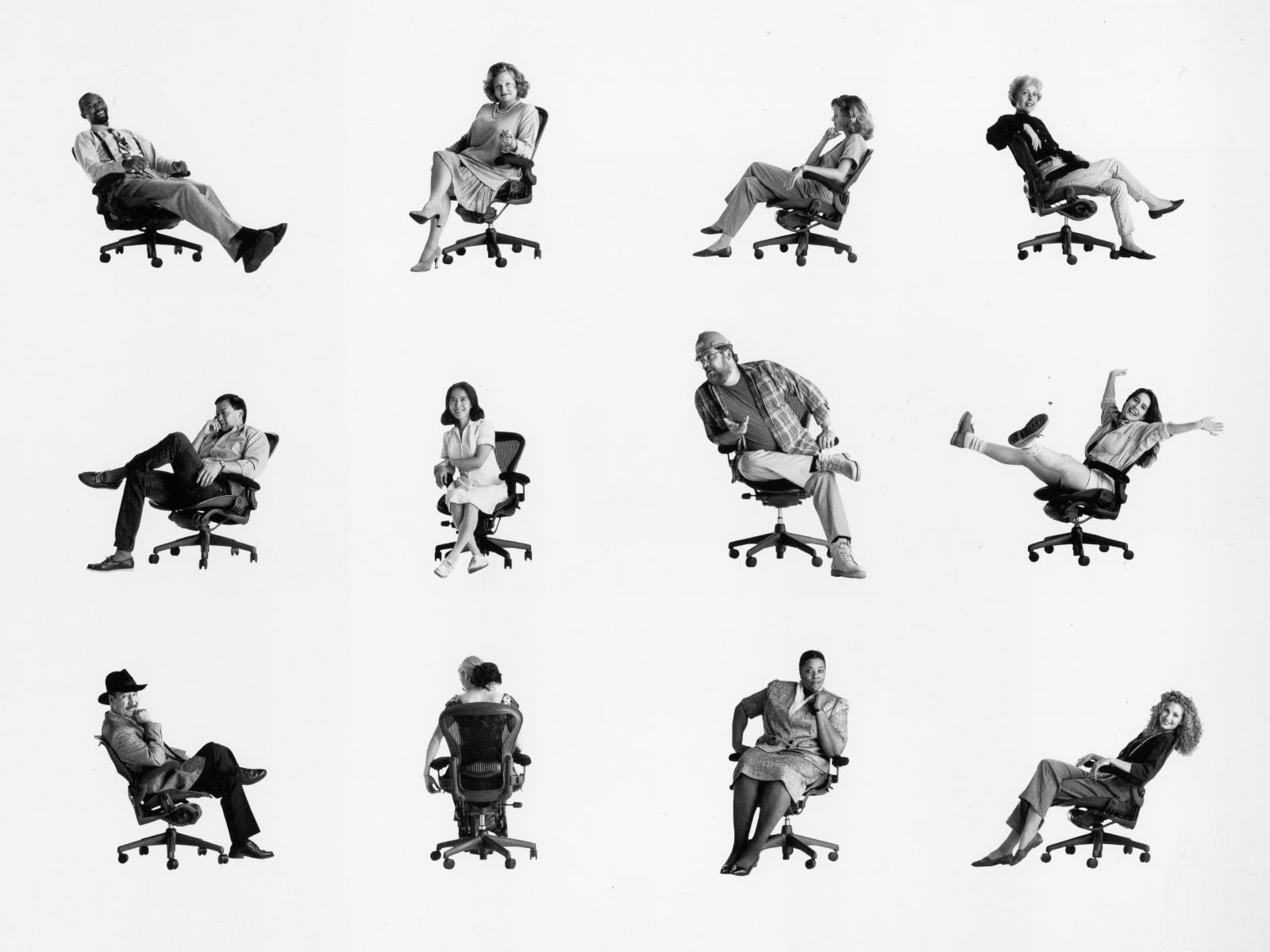
The archive’s portrait of sitting is wonderfully varied. People lean, cross their legs, turn, and recline. It is a reminder that supporting a person means allowing for the way that person actually inhabits a chair.
curious play / build to learn
Let the body
breathe.
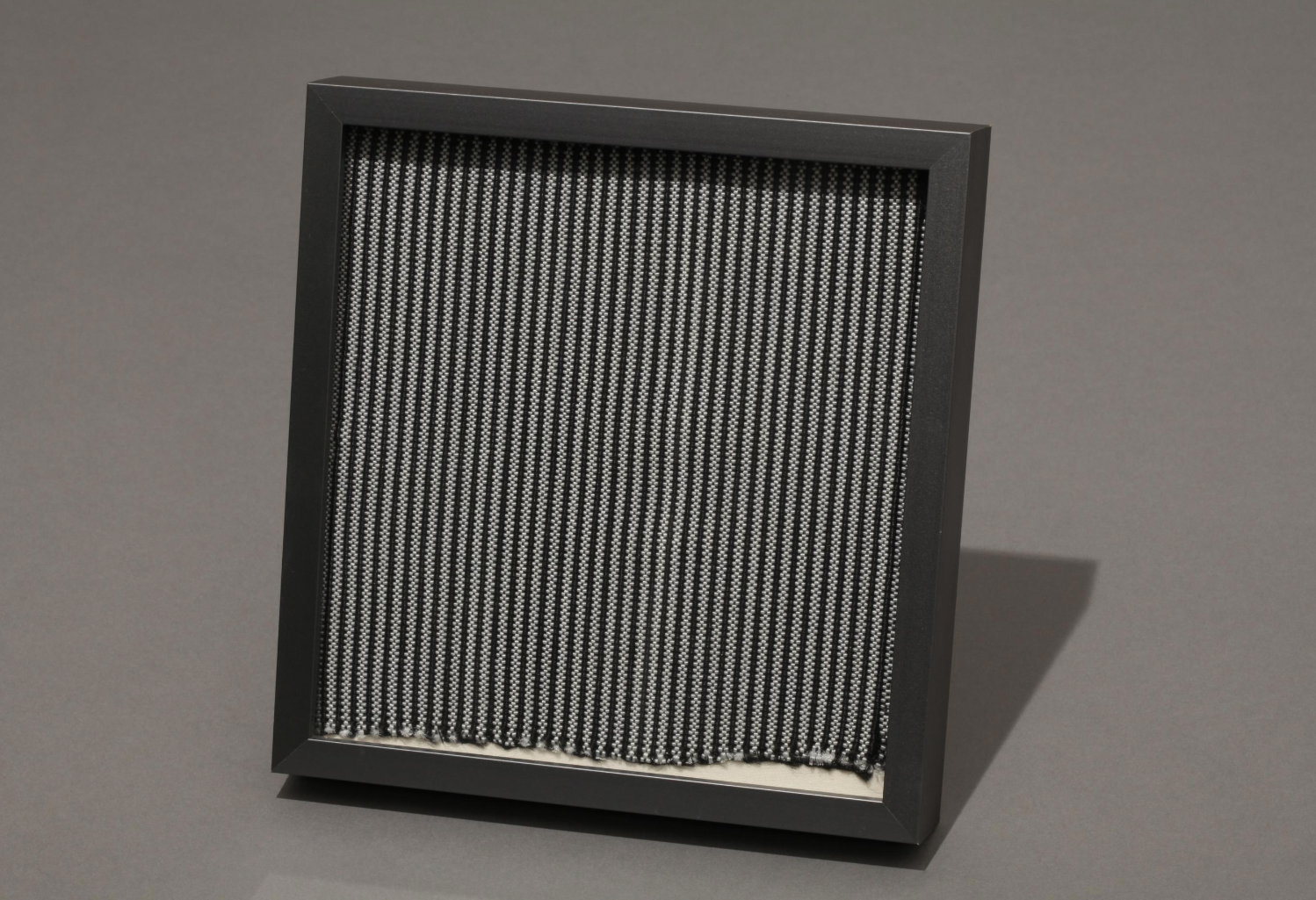
Once the problem was reframed around the person at work, inherited chair conventions could be questioned. Foam and conventional upholstery gave way to Pellicle, a tensioned, breathable suspension material engineered specifically for the chair.
It distributed support, allowed air to move, and made the working structure visible rather than hiding it beneath padding. But a material alone is not a sitting experience. Its tension, the frame around it, and the way it meets the body all matter.
A surface.
A frame.
A relationship.
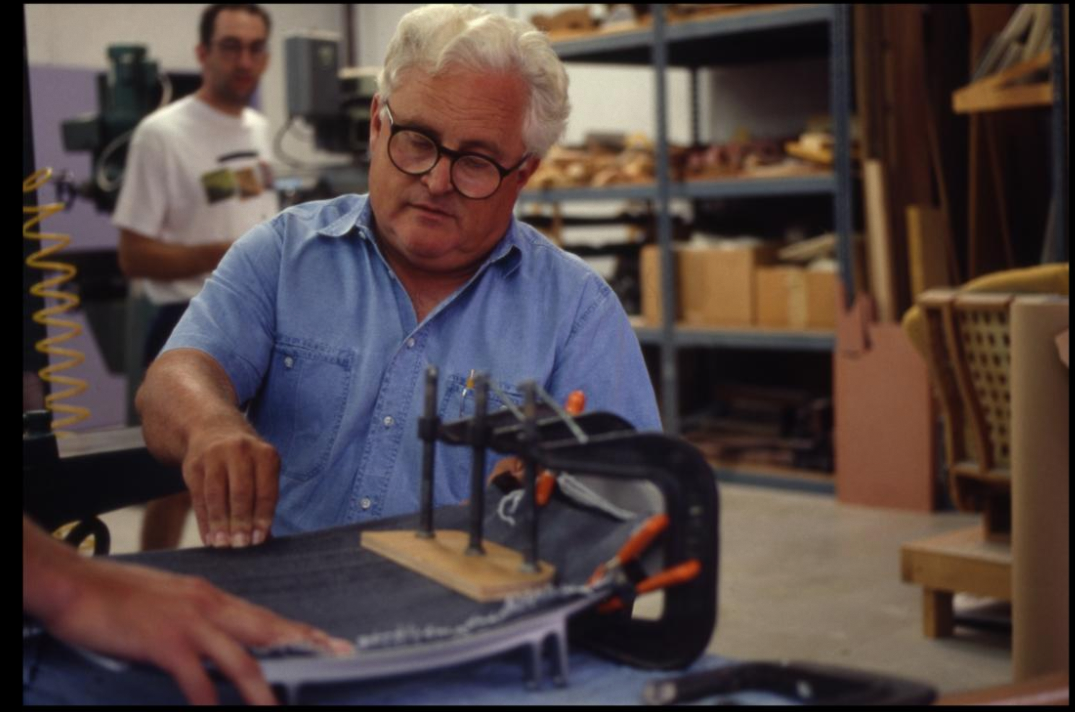
A small tension panel isolates the suspension material. Full-size studies bring it back into contact with the body. Between those scales, the question moves from what a material can do to what a chair can feel like.
Build to Learn made those relationships tangible. Samples could be handled. Frames could be changed. A seating buck could be sat in.
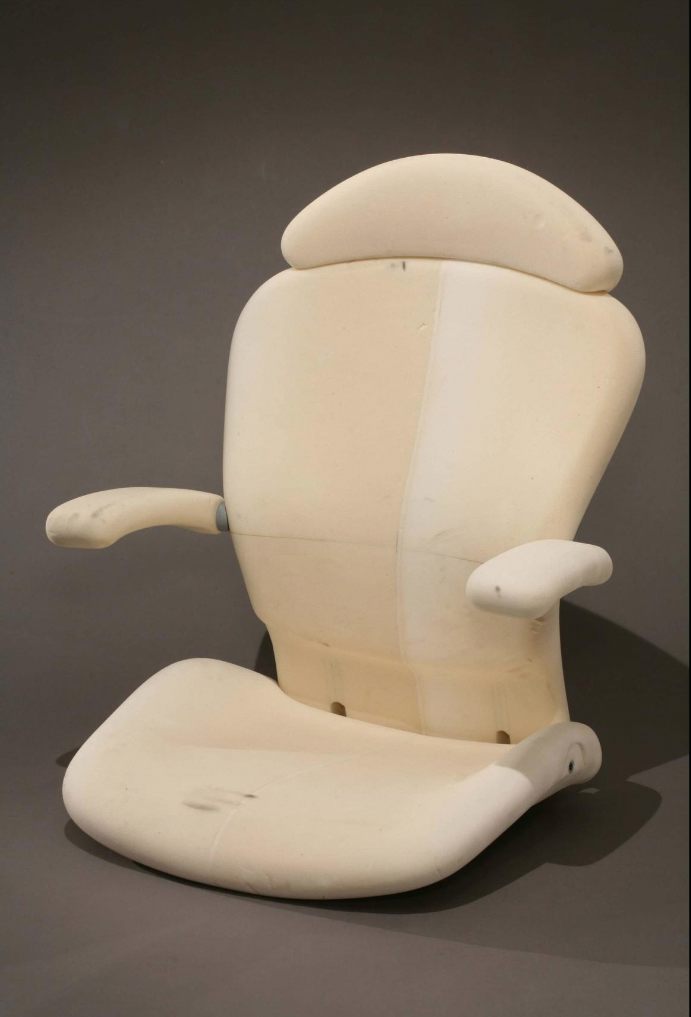
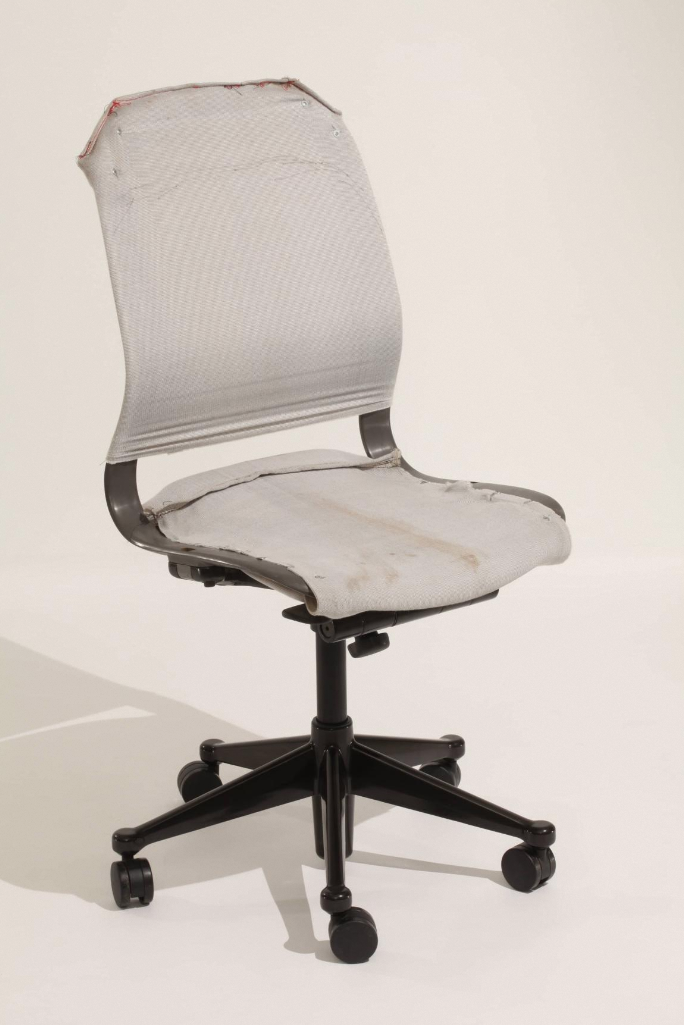
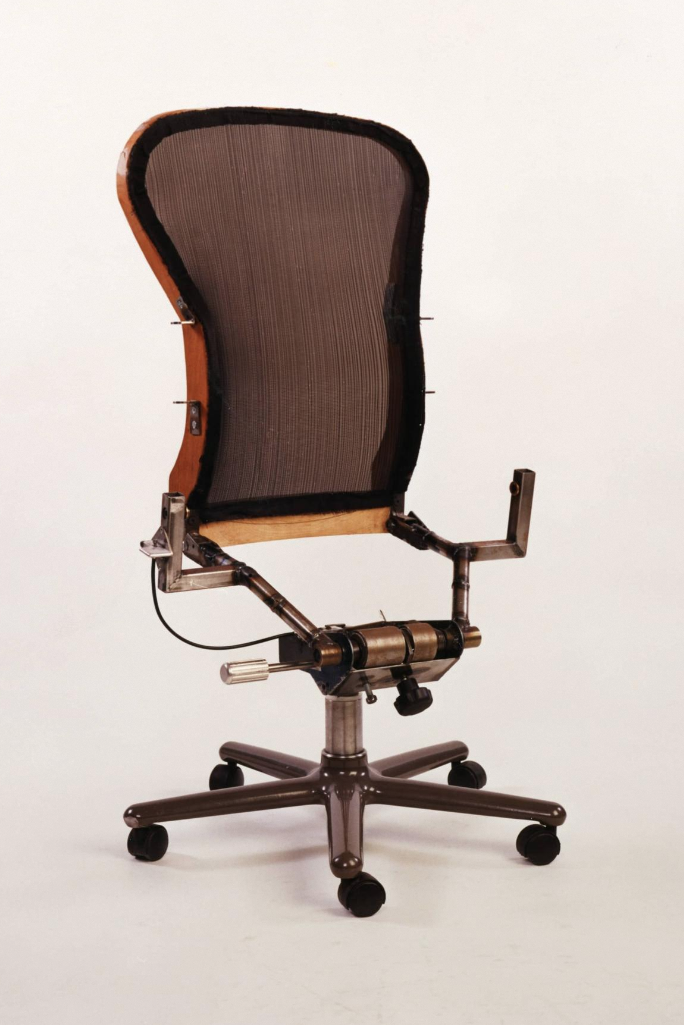
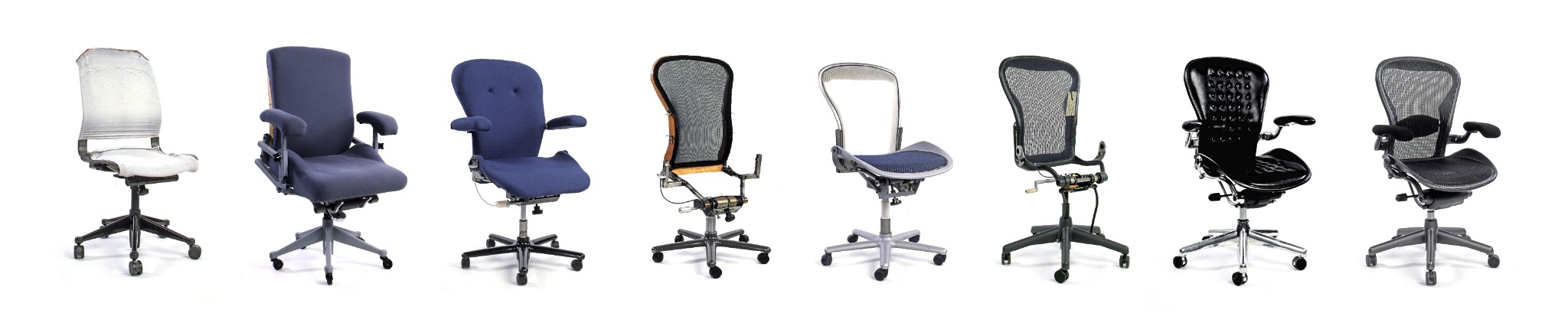
The development archive holds many versions of the idea: upholstered studies, bare frames, exposed mechanisms, and suspended surfaces. Together they reveal the range of physical inquiry behind the finished chair. Research defined the question; prototypes made the answers tangible.
kinematics / the body in motion
Make motion
tangible.
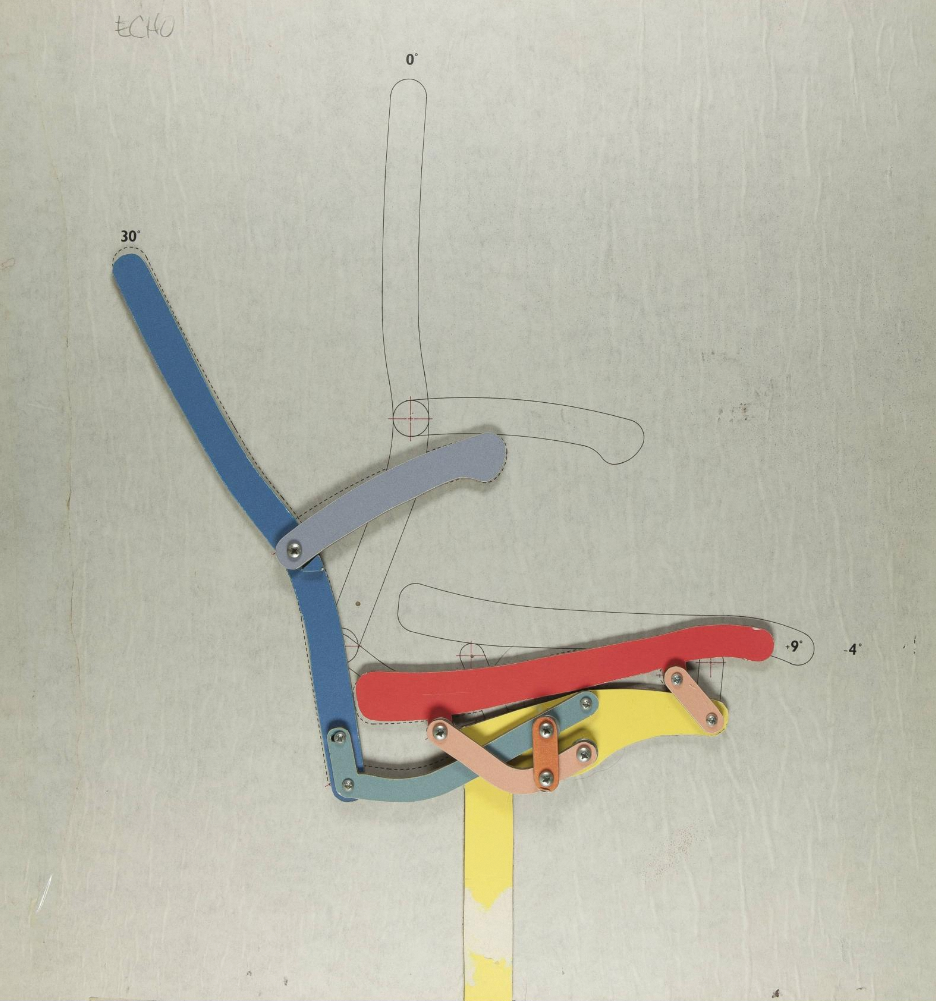
Computer work could encourage long periods of static sitting, but the human body still needed to move. Aeron’s tilt and support systems were developed to maintain a more fluid relationship between person and chair.
In the linkage study, colored parts and pivot points make the seat-and-back relationship visible. A drawing becomes something that can move. Geometry can be explored before it is hidden inside a finished mechanism.
The aim was to support movement naturally, allowing the chair to become a quieter part of the human-computer interface.
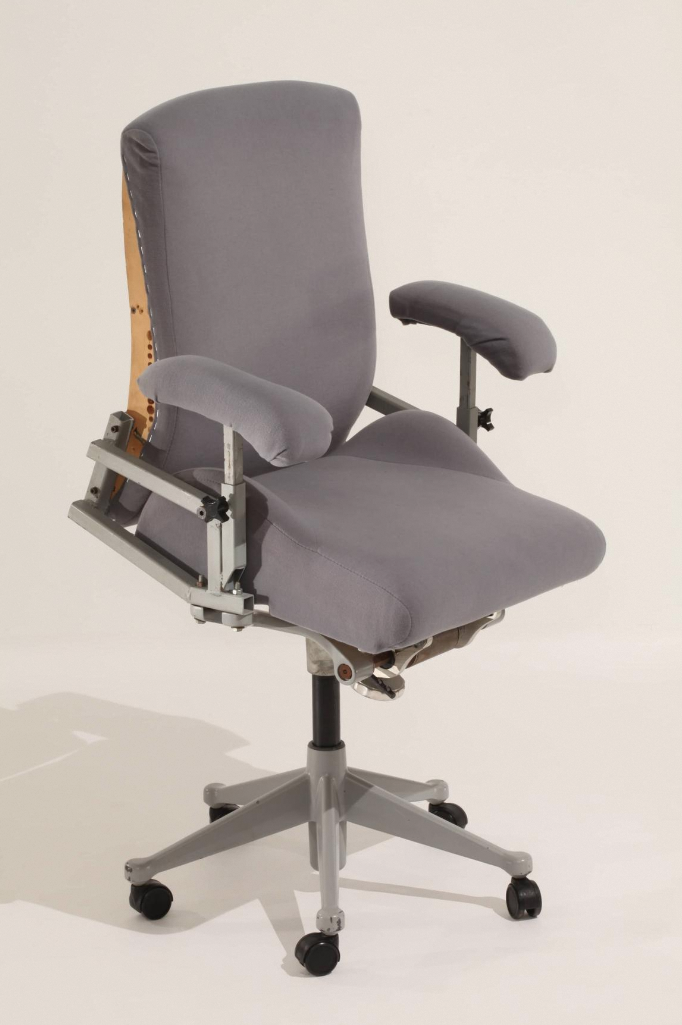
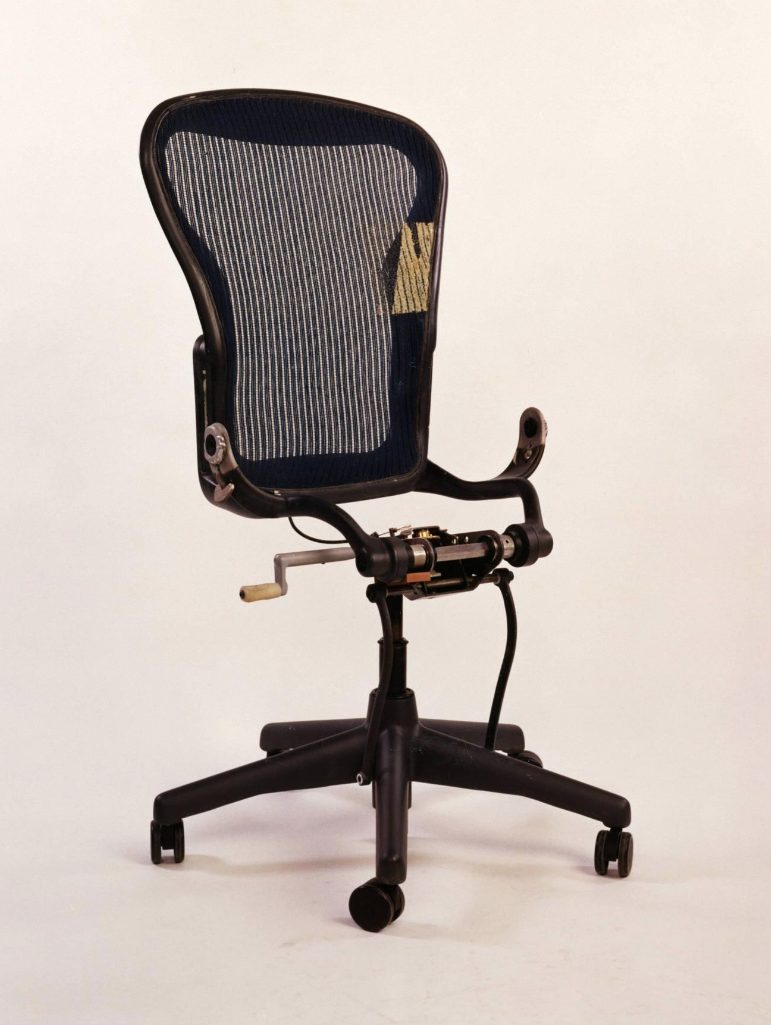
The full-size rigs expose what a finished chair conceals. An upholstered seat carries an external mechanism; a back-support assembly stands over an open base. These objects let the team work on a relationship without needing every other part of the chair to be resolved.
A prototype can be deliberately incomplete and still answer an important question.
The detail
of a detail.
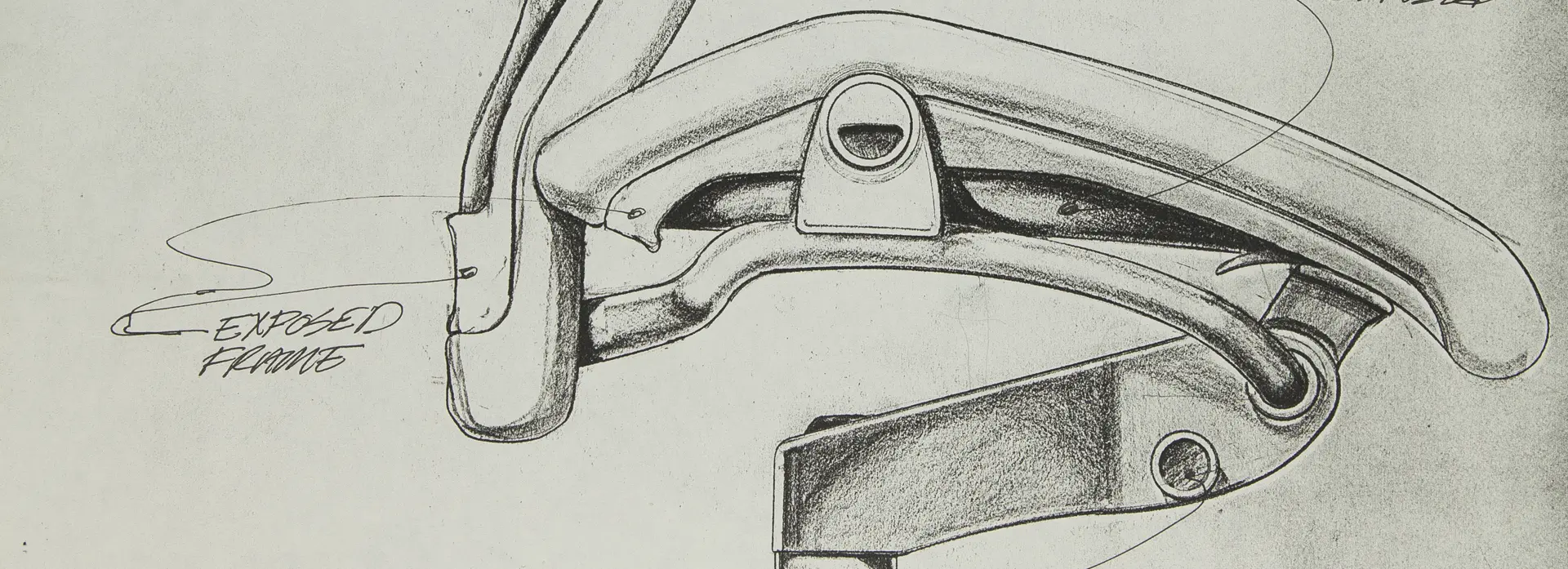
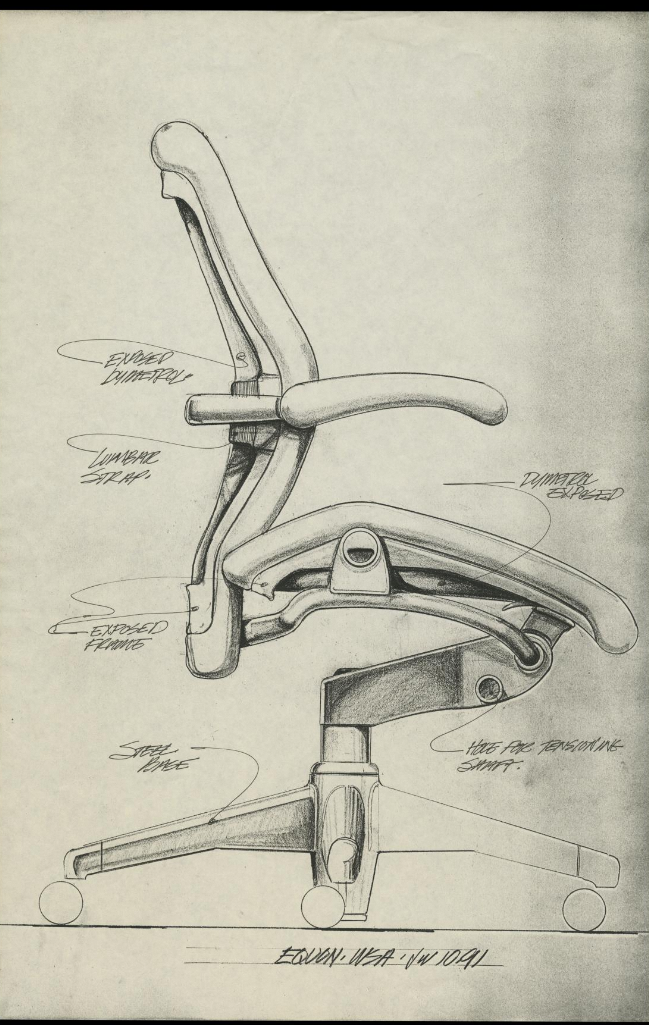
The concept sketches bring form and mechanism onto the same page. An exposed frame, a pivot, and the curve beneath the seat are treated as connected parts of the experience.
The visual character was already in conversation with the engineering.
function / form / realization
Performance
became the form.
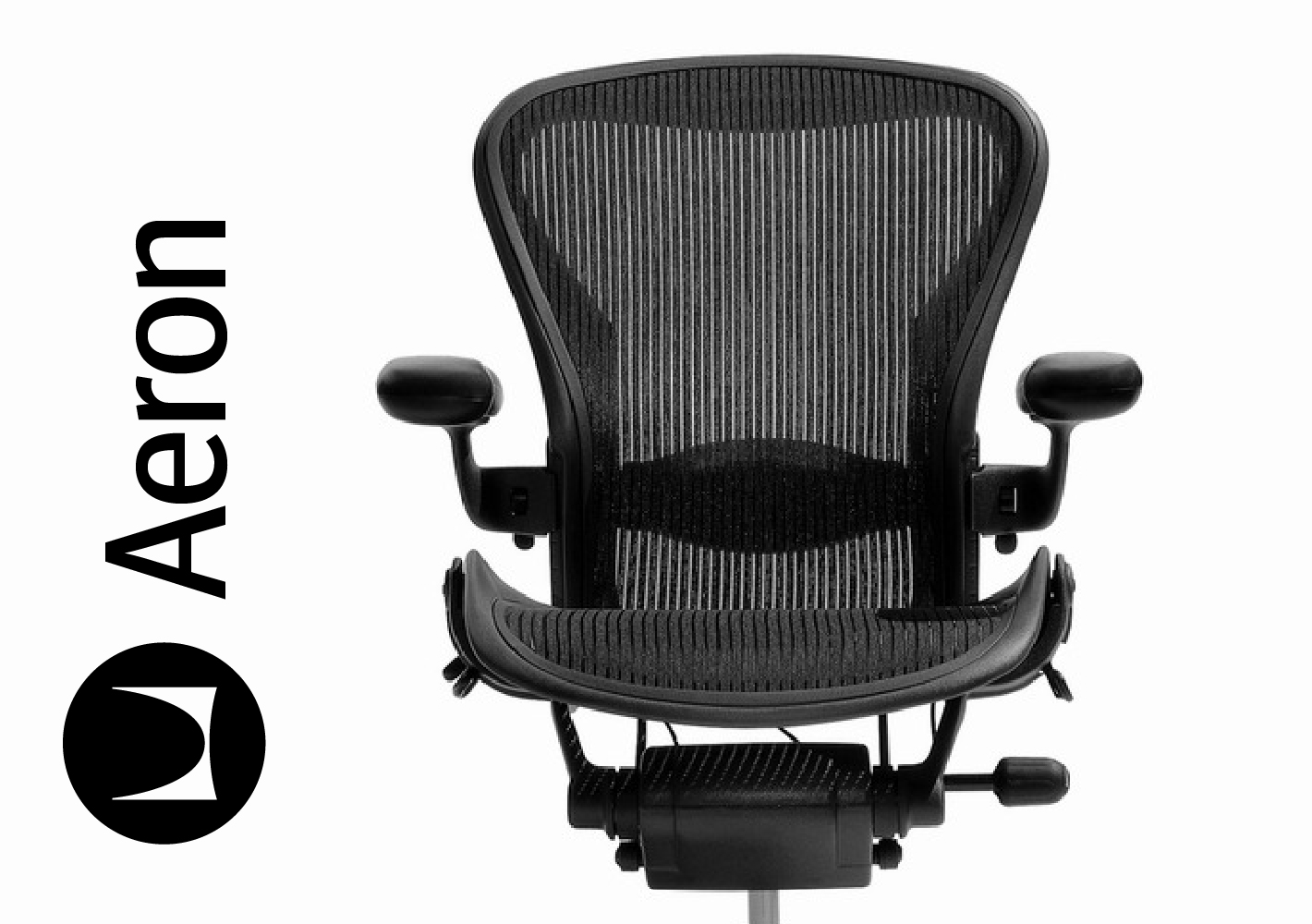
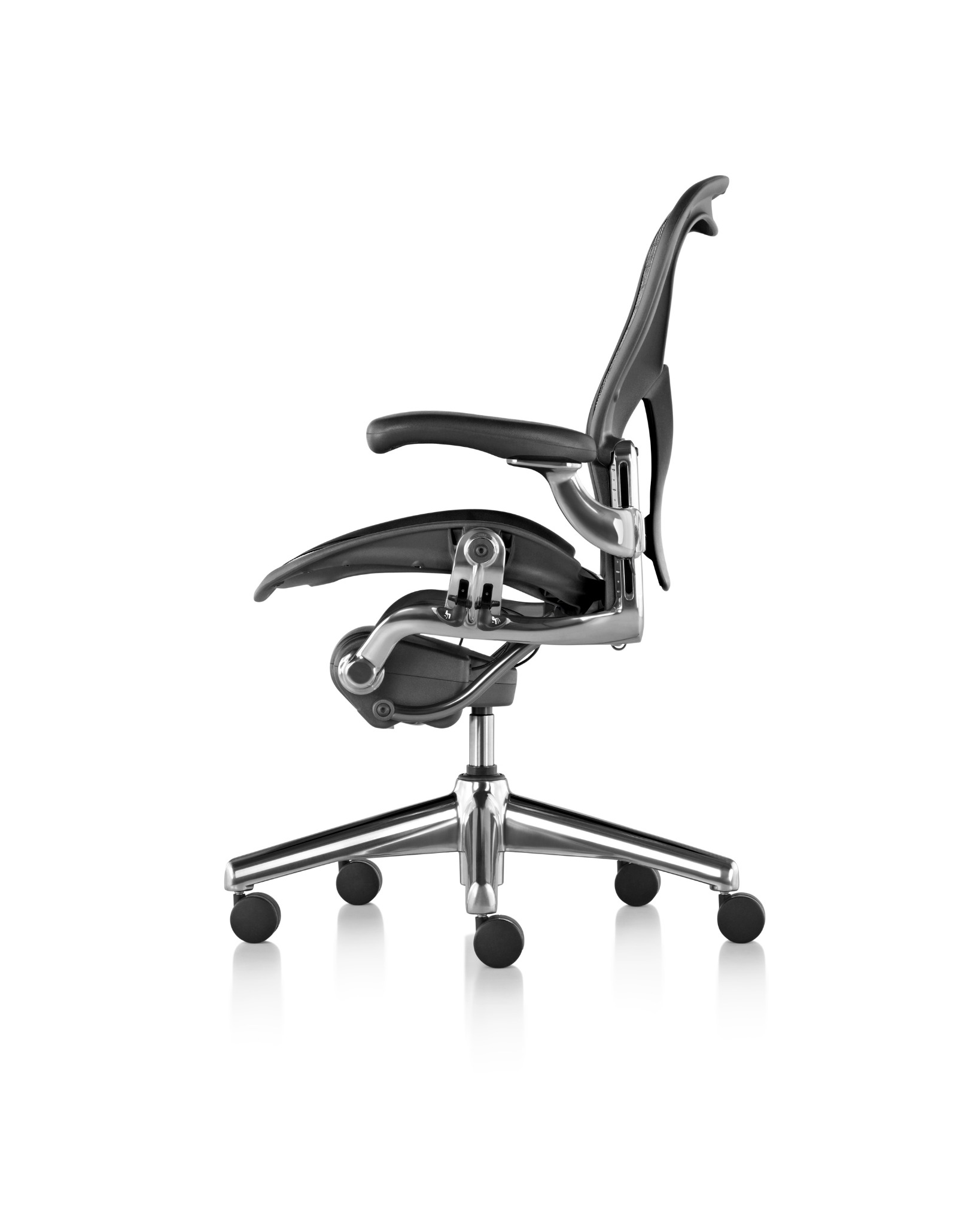
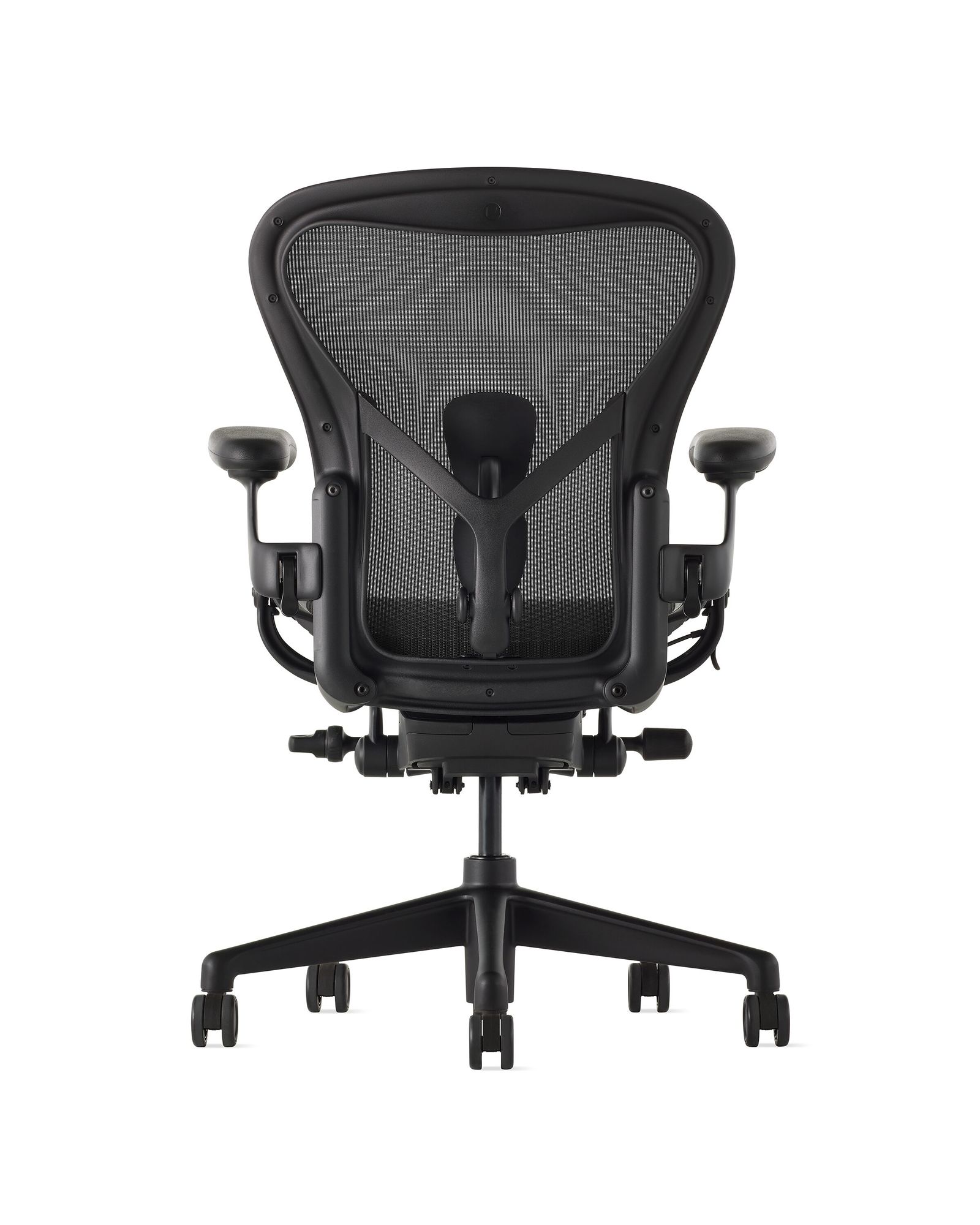
Aeron looked unfamiliar because its form grew out of a new system of requirements. The exposed frame, suspended membrane, mechanical structure, continuous curves, and absence of conventional upholstery were the visible result of ergonomics, technology, materials, motion, and making coming together.
The frame was both structure and the edge of the sitting experience. Models and fabrication studies brought its curves, sections, and construction into physical form.
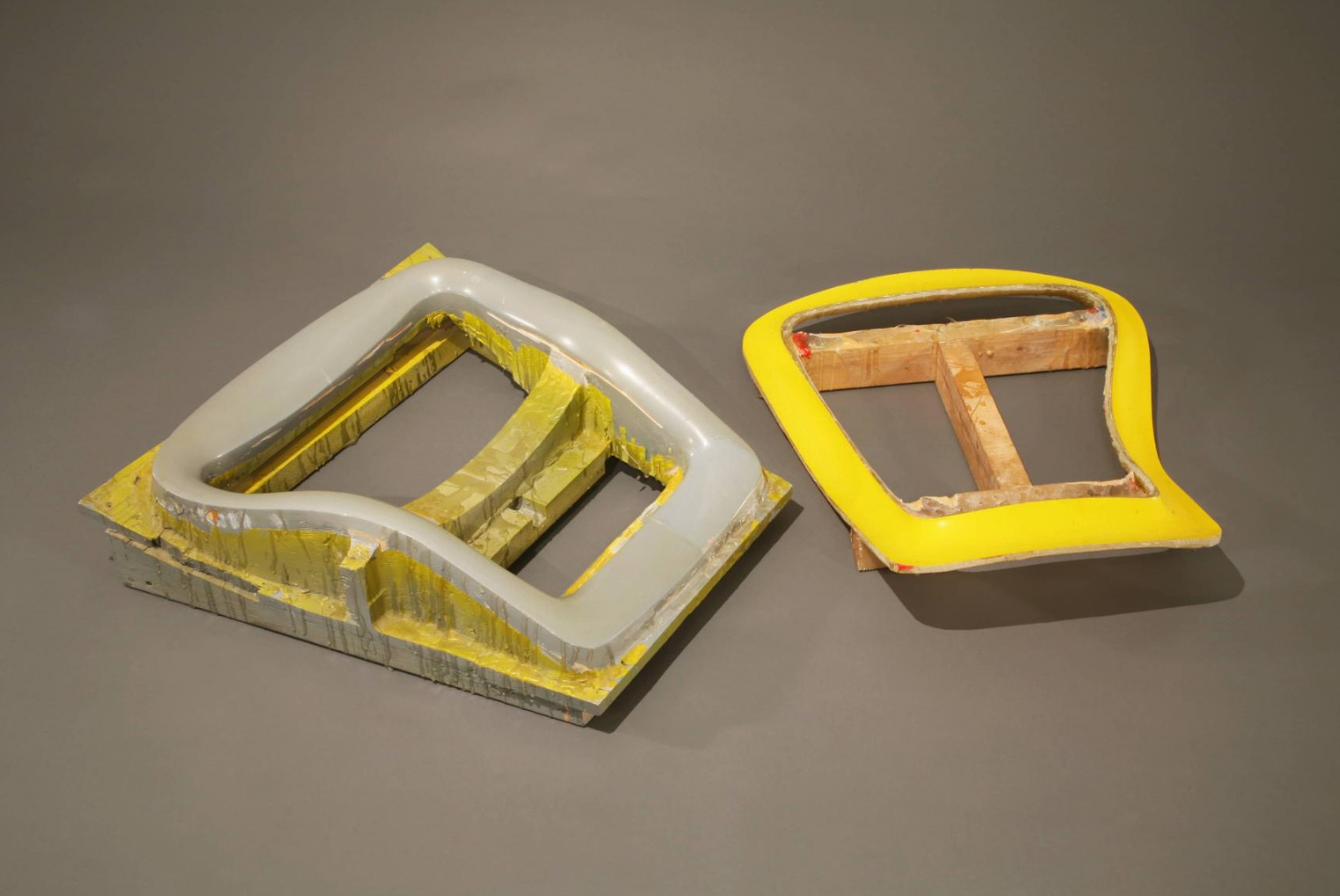
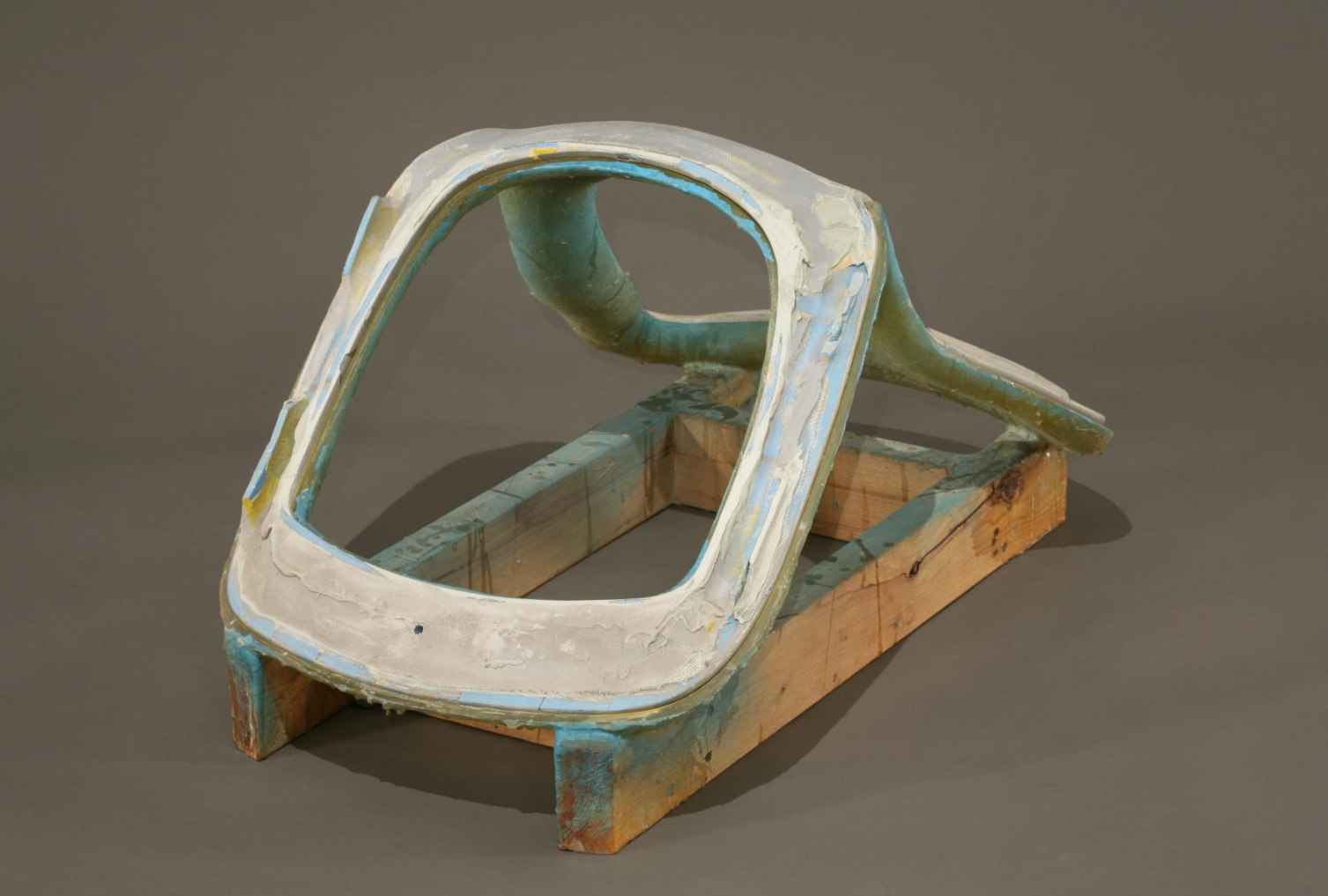
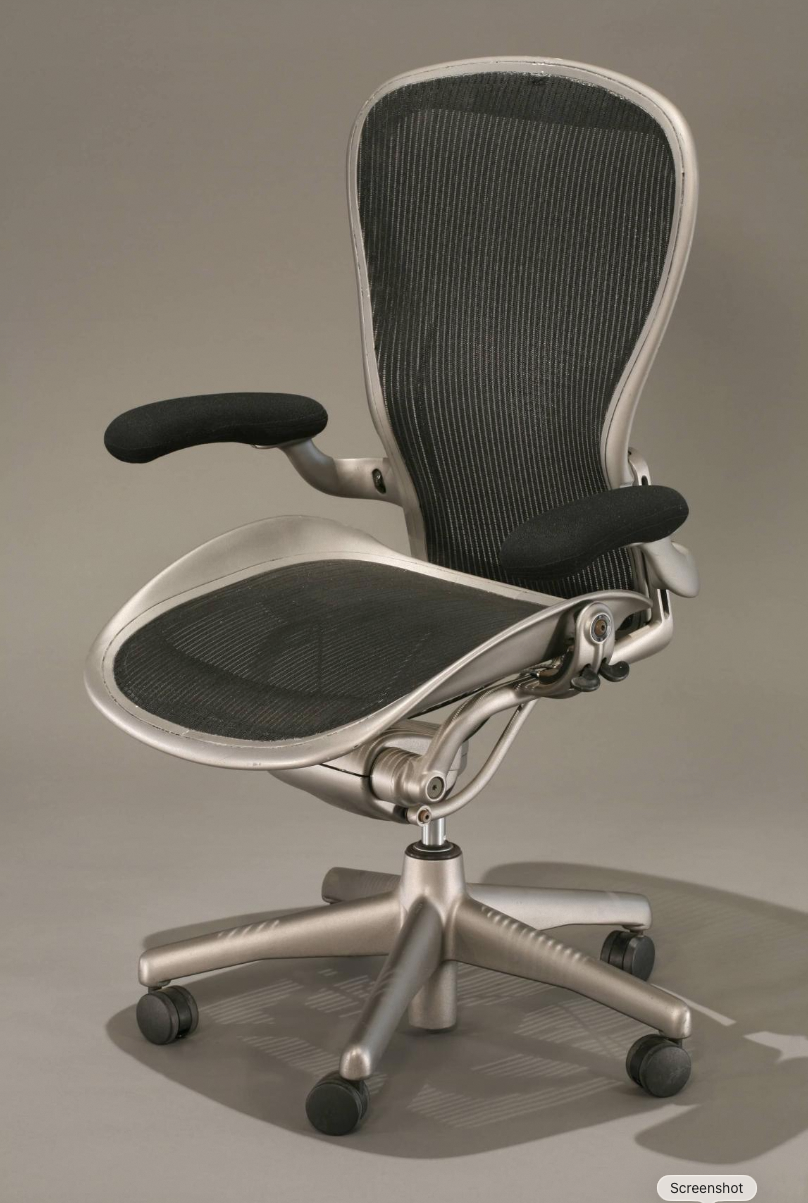
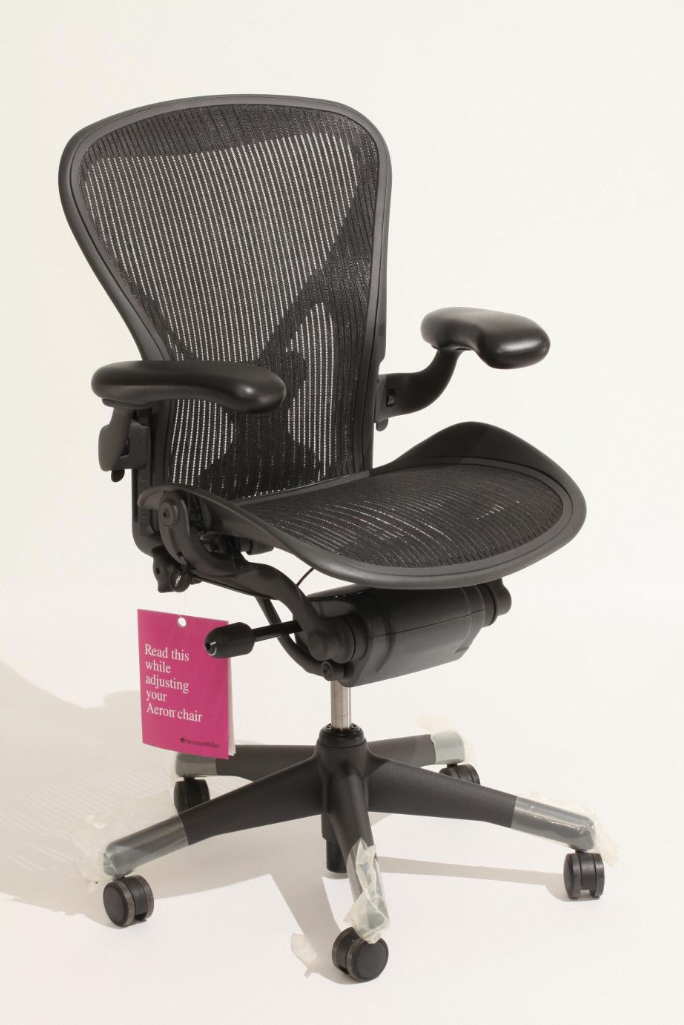
As the parts came together, the experiments became a coherent object. Support, adjustment, movement, and appearance had to work as one. The archive carries that transition from exposed assemblies to the recognizable chair.
1994 / a different kind of chair
A machine
for sitting.
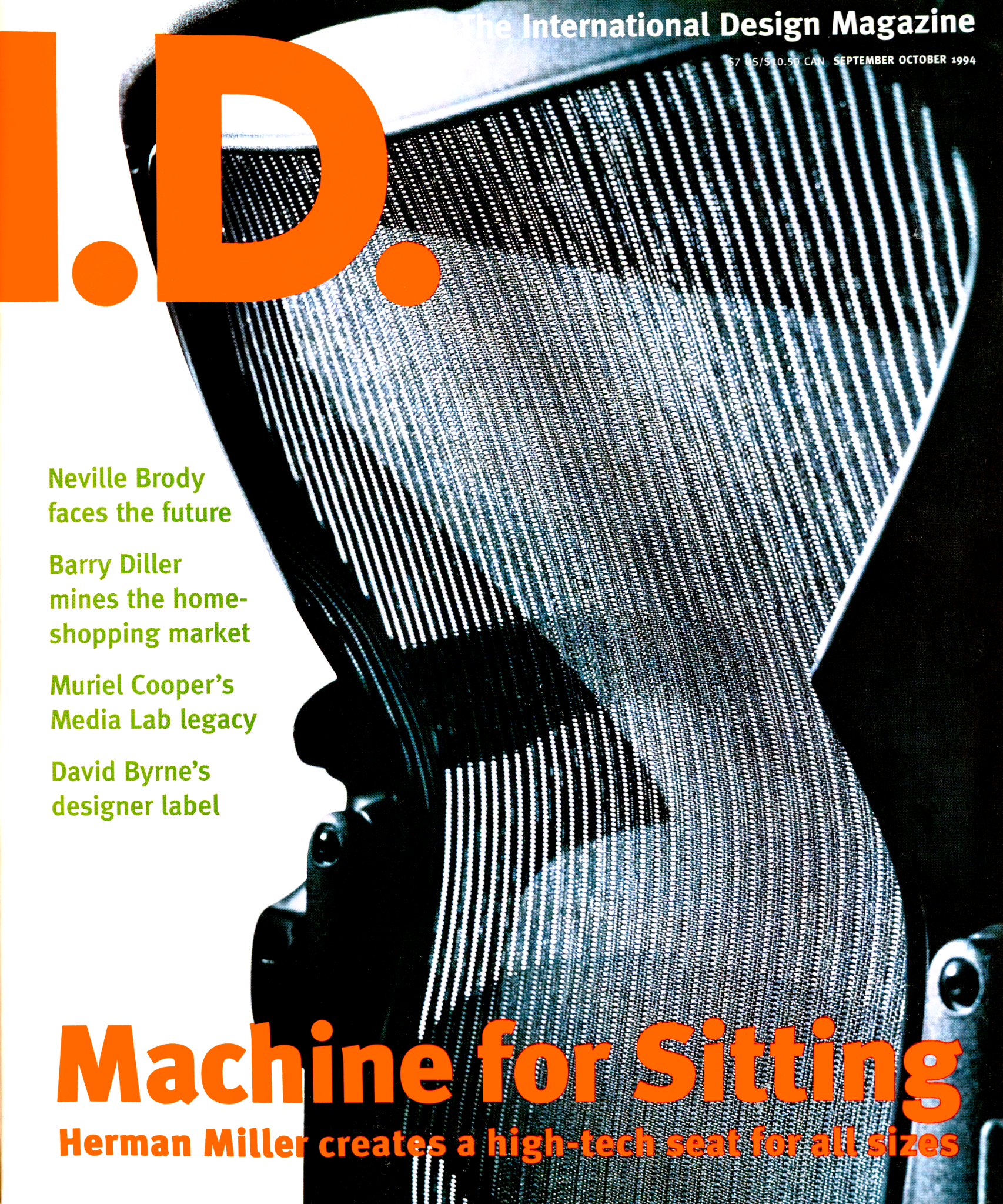
The I.D. cover captured the shift. The working structure had become the chair’s identity.
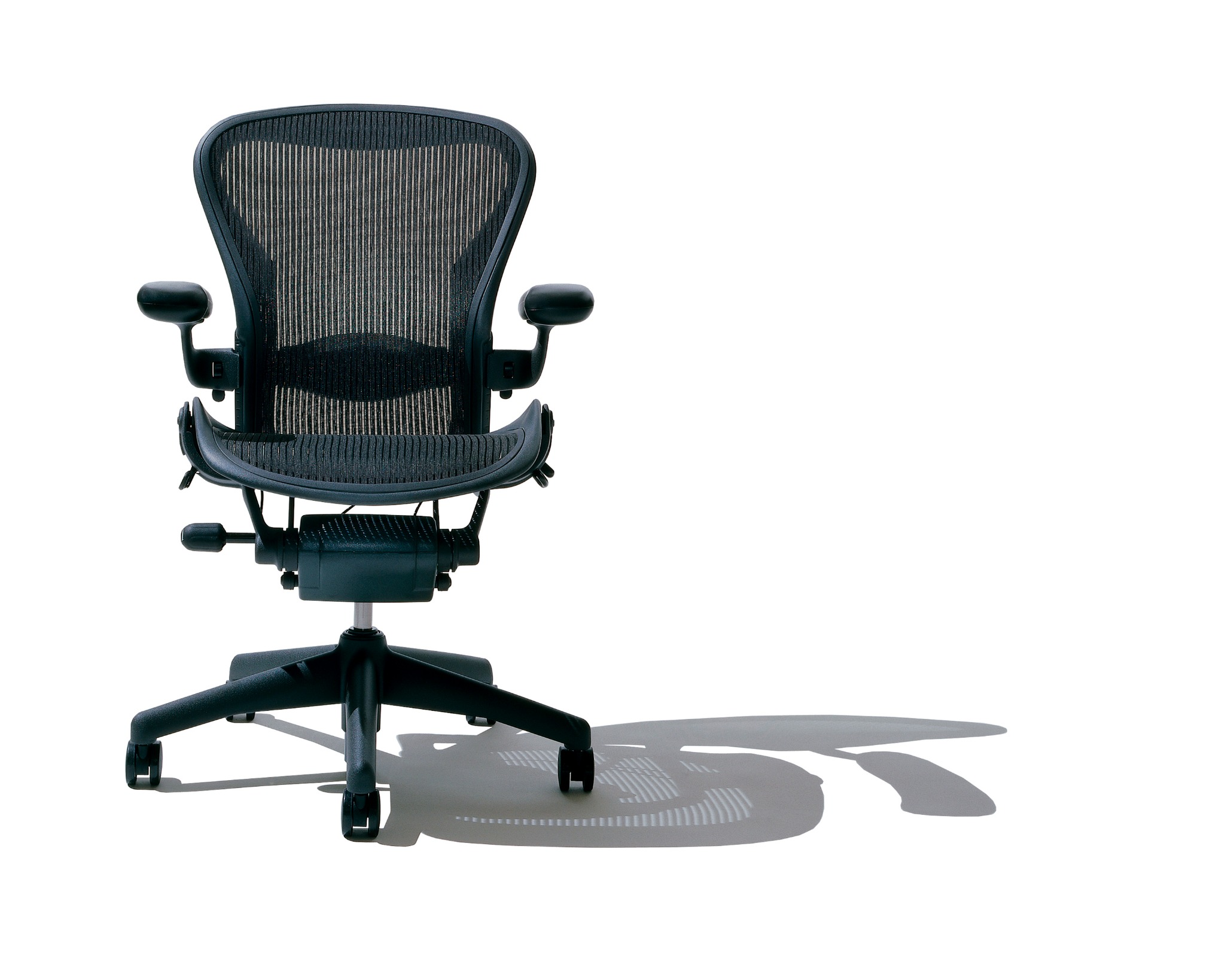
Aeron arrived when computers were becoming fundamental to work, ergonomic research was deepening, and materials and manufacturing made different solutions possible. The chair became meaningful because it responded to that larger world.
Introduced in 1994, Aeron entered the Museum of Modern Art’s collection that same year.
the continuing lesson / studio weber
See the relationships.
Build the possibility.
For us, this is the deeper Aeron lesson. Significant advancement comes from seeing the relationships between people, technology, behavior, environment, and making—and recognizing when those forces can converge into something new.
Designed by Bill Stumpf + Don Chadwick
A story from Studio Weber’s design lineage and development archive. Research film and development imagery from the Studio Weber archive; product photography and archival material from the supplied Herman Miller collection.
further reading
What would you like to know about Studio Weber?